
For IT and facility managers across the United States, managing the disposal of commercial-grade batteries is a complex but critical responsibility. Handling large quantities of batteries from sources like uninterruptible power supplies (UPS), laptops, servers, and medical equipment goes far beyond simple household recycling. It involves significant operational, safety, and regulatory considerations for any business. Improper disposal can lead to severe fire hazards, environmental contamination, and non-compliance penalties under frameworks like the Resource Conservation and Recovery Act (RCRA). A crucial part of preventing hazards and ensuring a smooth disposal process involves understanding how to store lithium batteries safely before they are transported for recycling.
This guide is designed to simplify that process for business audiences. We provide a comprehensive directory of B2B e-waste service providers and specialized battery recycling drop off locations. Each entry is tailored for commercial needs, focusing on organizations that can handle bulk quantities, provide pickup services, and offer the necessary documentation for your compliance audits. We move beyond simple retail drop-offs to include certified e-waste recyclers equipped for enterprise-scale requirements.
Throughout this listicle, you will find actionable information to help you select the right IT asset disposal partner for your organization's specific needs. We cover:
- Accepted Battery Types: From common lithium-ion and sealed lead-acid (SLA) to alkaline and NiCad.
- Service Options: Details on drop-off, scheduled pickups, and mail-in programs.
- Logistical Details: Including contact information, operating hours, and direct links to each provider.
- Compliance and Certification: Notes on providers holding certifications like R2 and e-Stewards.
This resource will help your business streamline its search, ensuring your company’s battery disposal strategy is efficient, secure, and fully compliant.
1. Beyond Surplus
Beyond Surplus stands out as a premier partner for businesses across the United States, offering a comprehensive and secure solution for IT Asset Disposition (ITAD) and electronics recycling. While primarily focused on enterprise-level needs, their Smyrna, Georgia facility also serves as a crucial drop-off point for Atlanta-area businesses, bridging the gap between national logistics and local service. Their operational model is built on security, compliance, and logistical excellence, making them a top-tier choice for organizations with stringent data protection requirements.
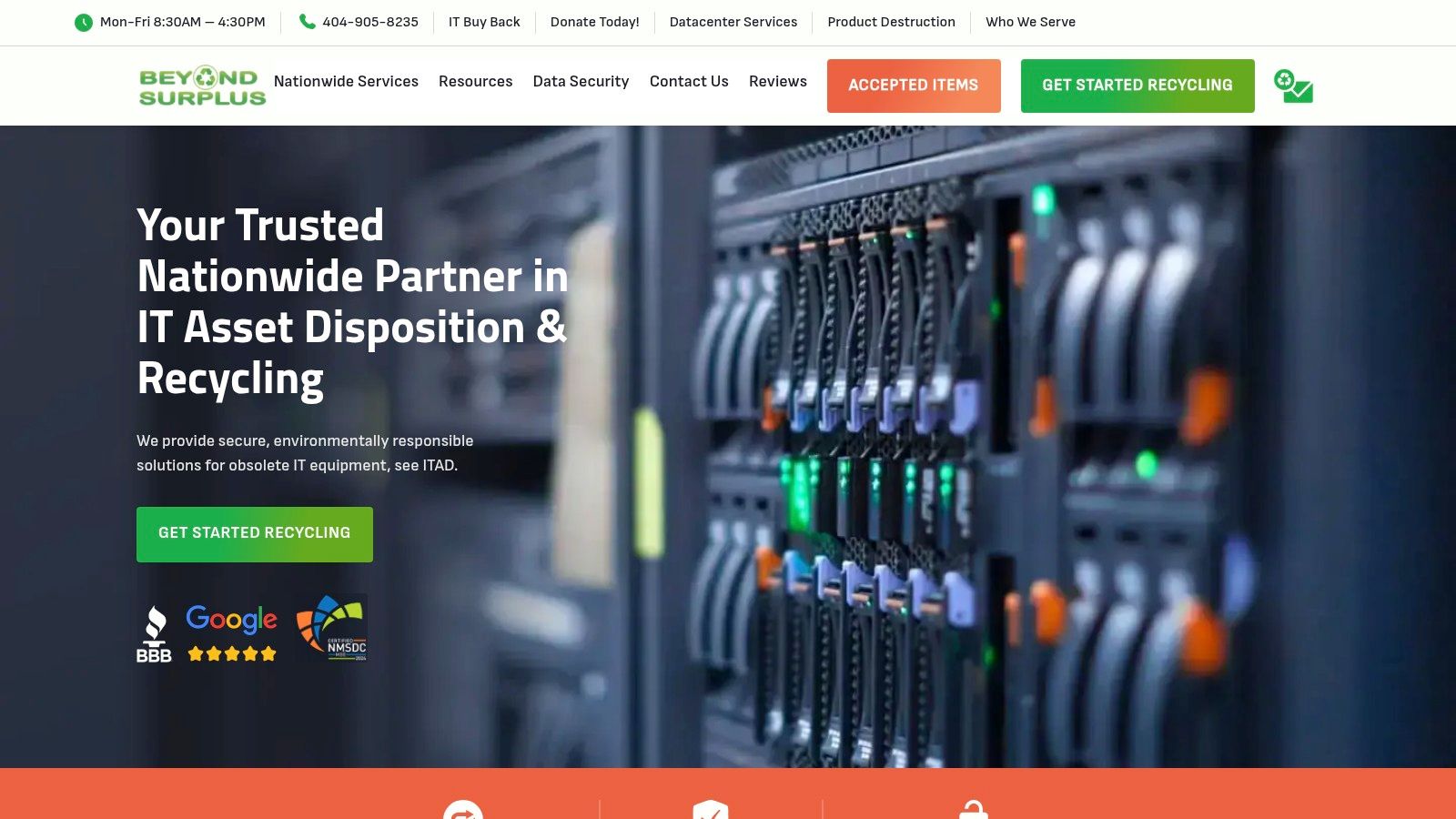
What truly distinguishes Beyond Surplus is its dual focus on nationwide logistics and transparent, certified data destruction. For IT directors and data center teams across the contiguous U.S., they manage the entire end-of-life process, from on-site de-installation and palletizing to secure transport and final disposition. This end-to-end service, complete with chain-of-custody documentation and Certificates of Recycling/Data Destruction, provides the defensible proof necessary for compliance with regulations like the FTC Disposal Rule.
Core Service Offerings & Use Cases
- Secure Data Destruction: Offers both on-site and off-site hard drive shredding, alongside certified data wiping, to ensure sensitive information is permanently irrecoverable. This is ideal for healthcare, finance, and government entities.
- Nationwide Business Pickups: Manages logistics for businesses, requiring a one-pallet minimum for priority service. Their team handles everything, simplifying the decommissioning process for IT managers.
- Value Recovery Program: Provides a buyback option for high-value IT equipment, allowing companies to recoup a portion of their initial investment while ensuring responsible recycling of remaining assets.
- Local Drop-Off & Mail-In: Their Smyrna warehouse accepts drop-offs from local businesses, and a mail-in program is available for select items. This service is for commercial clients only.
Important Note on Batteries: Beyond Surplus primarily recycles batteries that are installed within electronic devices like laptops, servers, and UPS systems. They do not accept loose or individual batteries (e.g., AA, AAA, C, D, or 9V). For detailed guidance on their battery policy, you can review their accepted items list.
Key Considerations
While Beyond Surplus excels in secure, documented ITAD, potential business clients should note that pricing is customized. Fees vary based on the type and volume of equipment, so you must request a quote. Additionally, while the company references certified processes, organizations requiring specific certifications like R2 or e-Stewards should request documentation directly to ensure it meets their compliance standards. Customer reviews consistently praise the company for its rapid response times and professional, punctual crews, highlighting a smooth and reliable user experience.
- Website: https://sonitechllc.com
- Best For: Businesses, data centers, and regulated industries needing secure, compliant, and documented electronics recycling and ITAD services with a nationwide reach.
2. Call2Recycle
As North America's premier battery stewardship program, Call2Recycle offers an unparalleled network of battery recycling drop off locations for business and consumer use. This organization partners with thousands of retailers, municipalities, and businesses to provide accessible recycling options for most common batteries. Their website features a powerful locator tool, allowing business users to quickly find the nearest participating drop-off point by entering their zip code, which is useful for small-scale corporate needs.
Key Features and Usage Tips
The primary strength of Call2Recycle is its extensive network, which includes major retailers like The Home Depot, Lowe's, and Staples. This wide coverage makes it a convenient option for recycling rechargeable batteries such as Lithium-Ion (Li-Ion), Nickel Cadmium (Ni-Cd), and Nickel Metal Hydride (Ni-MH). Recognizing the importance of electronics recycling, the program also provides crucial safety guidelines for preparing batteries for drop-off, including how to bag or tape terminals to prevent short circuits.
Practical Tips:
- Check Battery Types: Before visiting, use the locator to confirm which battery types a specific location accepts.
- Prepare Batteries Safely: Always tape the terminals of Li-Ion and other powerful rechargeable batteries with clear packing tape or place each one in a separate plastic bag before drop-off.
- Damaged Batteries: Call2Recycle provides specific instructions for handling damaged, defective, or recalled (DDR) batteries. Do not place these in standard collection boxes; follow their safety protocols.
Website: https://www.call2recycle.org
3. Earth911 Recycling Search
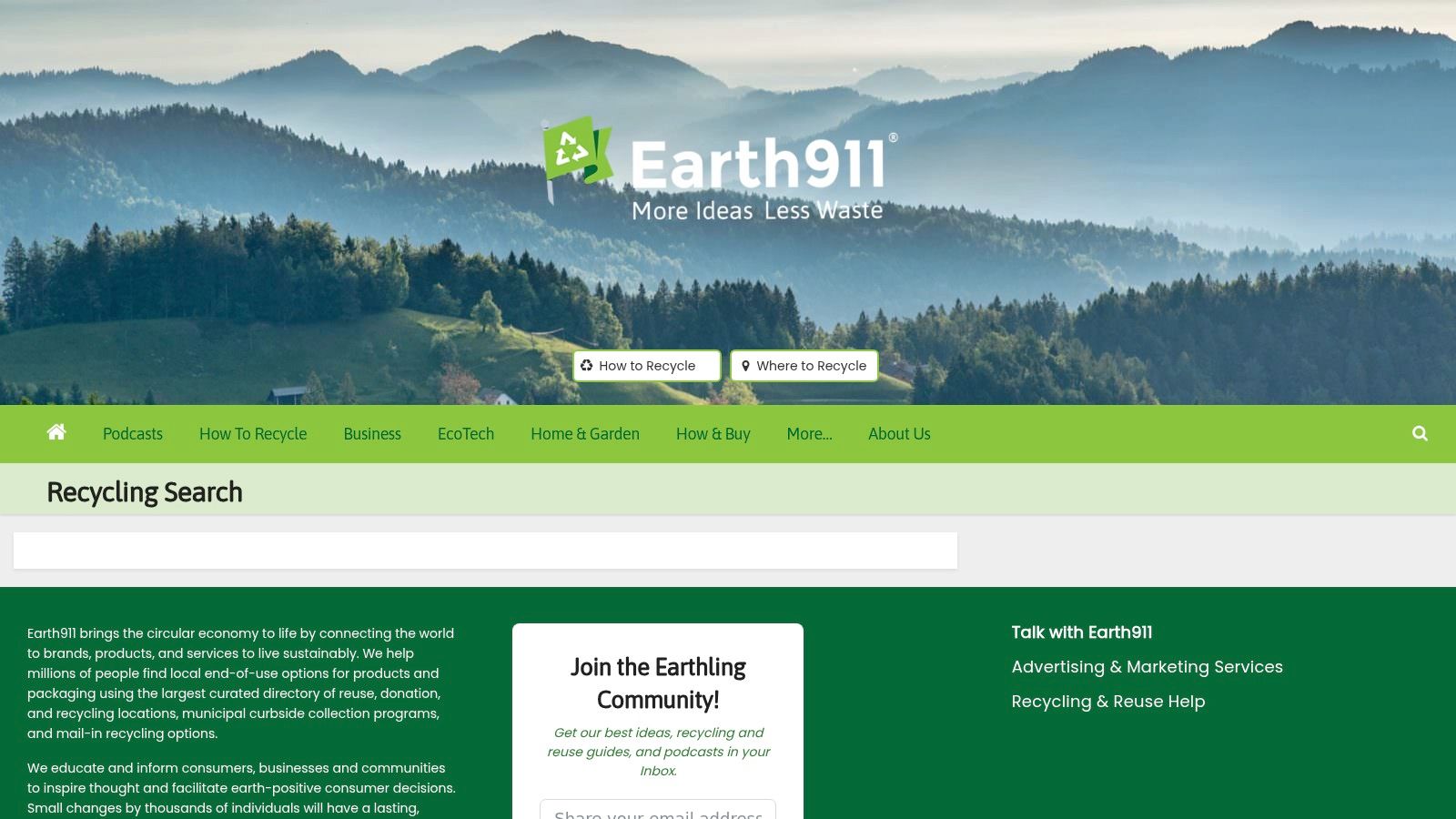
As a comprehensive environmental search engine, Earth911 provides a powerful tool for locating a wide array of battery recycling drop off locations across the United States. Its strength lies in its extensive database that aggregates information from municipal programs, retailers, and private recyclers. Business users can enter the type of battery they need to recycle along with their ZIP code to generate a map and list of nearby facilities, complete with operational details.
Key Features and Usage Tips
The primary advantage of Earth911 is its specificity. The search tool allows users to filter by exact battery chemistry, such as alkaline, lithium-ion, nickel-cadmium, button cell, or lead-acid. This feature is particularly useful for businesses needing to find specialized facilities, like municipal or commercial sites, that accept battery types not typically handled by retail drop-off programs. The platform also offers educational guides on proper battery identification and preparation.
Practical Tips:
- Filter Precisely: Use the specific battery type filter (e.g., "Lithium-Ion Batteries") to get the most accurate results.
- Call Ahead: Because Earth911 aggregates data from many sources, listing details can sometimes be out of date. It is always a best practice to call the location directly to confirm their policies, hours, and any potential fees before you go.
- Explore Local Options: Pay close attention to commercial and municipal listings in your search results, as these are often the best choice for recycling specific or less common battery types in bulk.
Website: https://earth911.com/recycling-search/
4. The Home Depot
As a major national retailer, The Home Depot leverages its extensive physical footprint to offer convenient battery recycling drop off locations. Through its partnership with Call2Recycle, most U.S. stores provide free in-store collection bins, typically located near the main entrance or customer service desk. This program is specifically designed for common rechargeable batteries and can serve small businesses with low-volume recycling needs.
Key Features and Usage Tips
The primary advantage of The Home Depot's program is its convenience and consistency for small quantities. The partnership ensures that the collected batteries are managed responsibly through the Call2Recycle stewardship program. This service is limited to rechargeable batteries (and cell phones) weighing under 11 pounds and rated below 300 watt-hours, covering most batteries from commercial power tools and small office devices.
Practical Tips:
- Confirm Participation: While most stores participate, it's wise to use the Call2Recycle locator first to confirm the service is active at your specific Home Depot location.
- Rechargeables Only: This program is exclusively for rechargeable batteries (like Li-Ion, Ni-Cd, Ni-MH) and does not accept single-use alkaline, damaged, or automotive batteries.
- Commercial Limits: These bins are not intended for large commercial volumes. Businesses with significant quantities should contact a dedicated IT asset disposal service.
Website: https://www.homedot.com
5. Lowe's
As a major home improvement retailer, Lowe's provides another highly accessible network of battery recycling drop off locations. Through their partnership with the Call2Recycle program, most Lowe's stores feature prominent collection bins, making it convenient for small businesses to drop off old power tool batteries and other rechargeable cells.
Key Features and Usage Tips
The primary advantage of using Lowe's is convenience and widespread coverage, especially for recycling batteries from cordless power tools often used in facilities management. Their participation in the Call2Recycle network ensures a standardized process for accepting rechargeable batteries like Li-Ion, Ni-Cd, and Ni-MH. This service complements, rather than replaces, comprehensive services found at dedicated electronics drop off locations which handle a wider array of e-waste for businesses.
Practical Tips:
- Confirm Participation: Use the Call2Recycle locator or call your local store to confirm they have a bin and it is not full.
- Focus on Rechargeables: The program is designed for rechargeable batteries. Single-use alkaline batteries are typically not accepted.
- Respect the Purpose: These in-store bins are intended for small-quantity drop-offs. Businesses with large volumes should seek commercial recycling solutions to avoid overwhelming the system.
Website: https://www.lowes.com
6. Batteries Plus
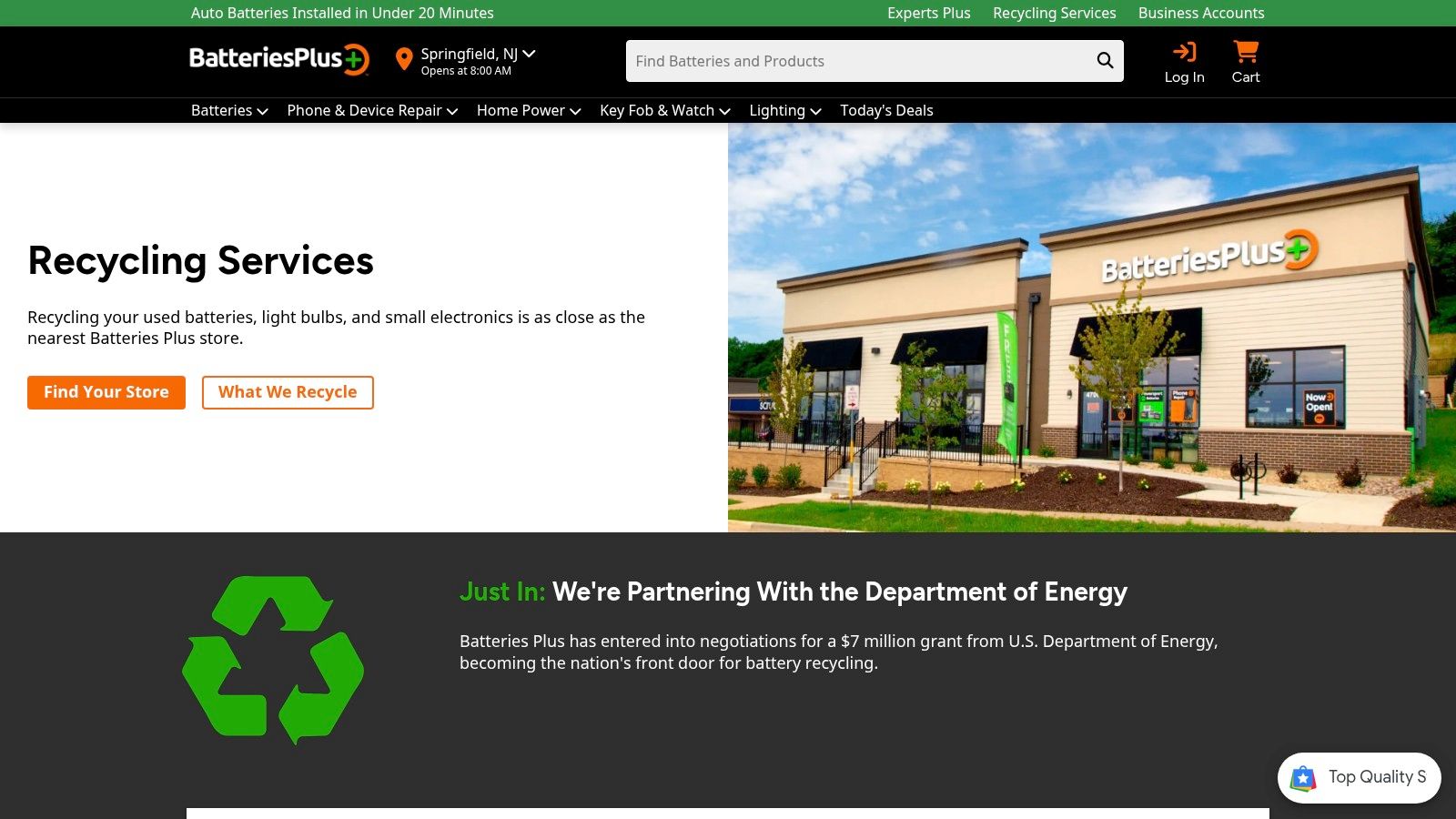
As a prominent national specialty retail chain, Batteries Plus provides versatile battery recycling drop off locations for consumers and businesses alike. Beyond selling new batteries, the stores are equipped to handle the responsible disposal of a vast array of battery types, often going beyond what typical free programs accept. Their website offers a store locator, where staff can guide you on recycling everything from common office batteries to complex lead-acid and lithium-ion power packs.
Key Features and Usage Tips
Batteries Plus stands out for its broad acceptance criteria and robust solutions for businesses, including prepaid recycling boxes and customized pickup programs for larger volumes. This makes it a one-stop-shop for many commercial recycling needs. Since they also handle small electronics, it's a convenient option when you need to understand how to prep electronics for recycling alongside your batteries.
Practical Tips:
- Confirm Local Policies: As a franchise, recycling services and potential fees can vary by store. Always call your local Batteries Plus ahead of time to confirm what they accept and if any costs apply.
- Ask for Guidance: The in-store staff are experienced with battery handling and can provide immediate advice.
- Business Inquiries: For commercial needs, inquire about their volume-based recycling programs or mail-in boxes, which offer a streamlined disposal process for organizations.
Website: https://www.batteriesplus.com/recycling
7. AutoZone
As a leading nationwide automotive parts retailer, AutoZone provides specialized battery recycling drop off locations specifically for vehicle batteries. This makes them a go-to option for businesses managing fleets or facility equipment that use lead-acid batteries. Their program is integrated directly into their business model, often providing financial incentives like store credit for turning in a used automotive battery.
Key Features and Usage Tips
AutoZone’s primary advantage is its focus on lead-acid batteries from cars, forklifts, and other commercial vehicles, which most other programs do not accept. The "core charge" system is a powerful incentive for proper disposal. This streamlined process prevents these heavy, hazardous batteries from ending up in landfills. It's important to recognize that their services do not extend to the small office batteries covered in a typical guide to disposing of cell phones and batteries.
Practical Tips:
- Confirm Incentives: Call your local AutoZone ahead of time to confirm their current policy on non-core returns and commercial quantity limits.
- Handle with Care: Automotive batteries are heavy and contain corrosive acid. Transport them upright in a sturdy container to prevent tipping and leaks.
- Not for Office Batteries: Remember that this service is exclusively for lead-acid vehicle-style batteries. Do not bring them your standard AA, AAA, or lithium-ion device batteries.
Website: https://www.autozone.com
8. O'Reilly Auto Parts
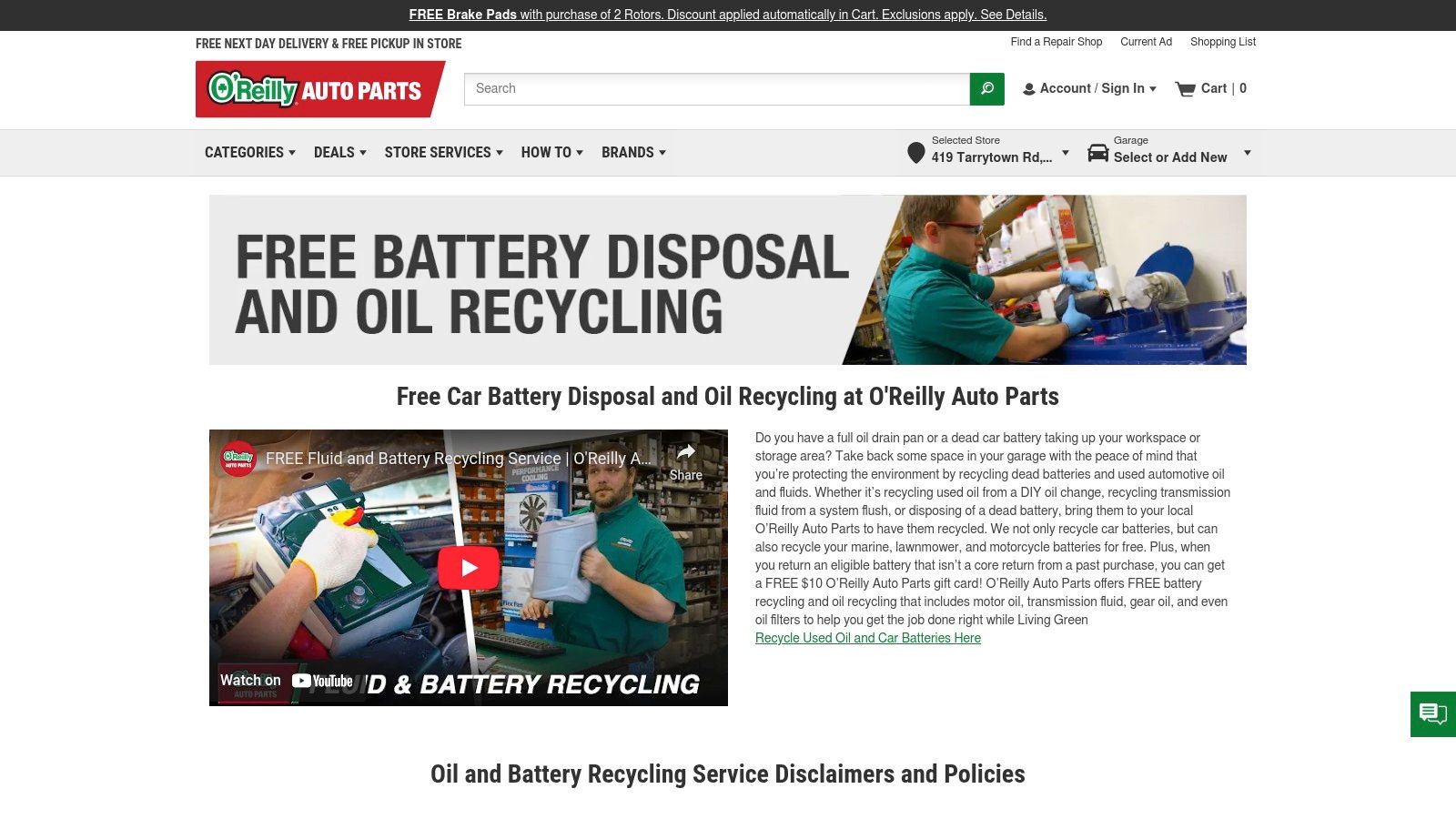
For businesses dealing with vehicle, marine, or industrial equipment batteries, O'Reilly Auto Parts offers a straightforward and rewarding solution among battery recycling drop off locations. This national auto parts retailer provides a take-back program for lead-acid batteries, a critical service for keeping these hazardous materials out of landfills. Their program is notable for its clear financial incentive, often providing a store gift card for returned automotive batteries.
Key Features and Usage Tips
O'Reilly's primary strength is its convenience for fleet and facilities managers, as you can often recycle other used parts at the same time. The company clearly publishes its take-back policies, including a typical five-battery-per-day limit and a gift card incentive for qualifying returns. This transparent approach removes guesswork for businesses needing to dispose of multiple units.
Practical Tips:
- Confirm Incentives: Call your local store to confirm the current gift card offer and daily drop-off limits for commercial customers.
- Handle with Care: Transport batteries upright in a sturdy box or plastic container to prevent tipping and acid leaks.
- Check Policies: While the program focuses on lead-acid types, some stores may accept other batteries based on local regulations. It is essential to call ahead to verify.
Website: https://www.oreillyauto.com/store-services/free-fluid-and-battery-recycling
9. Advance Auto Parts
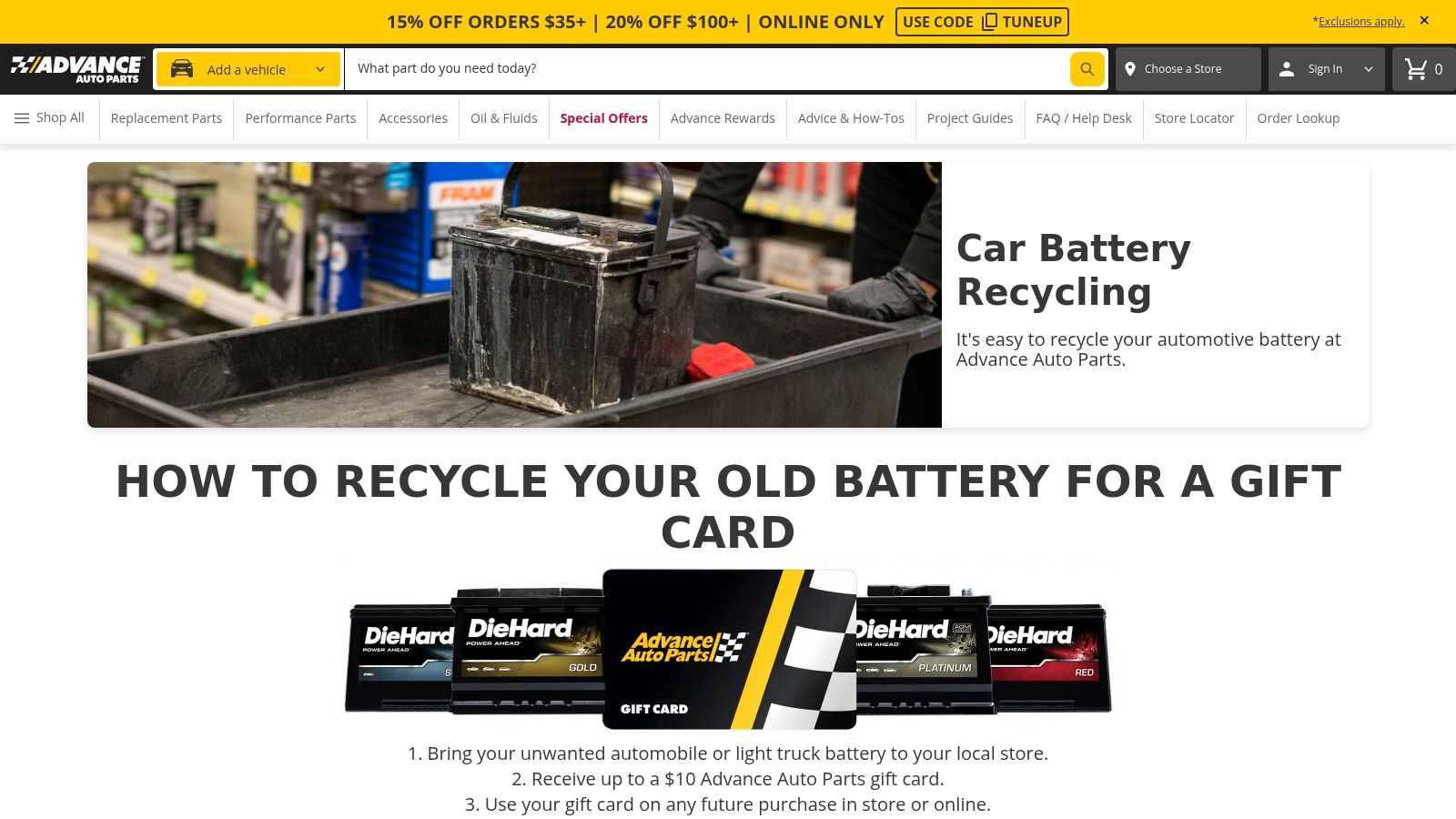
For businesses managing fleets or facility equipment, Advance Auto Parts provides a highly accessible and financially rewarding recycling solution. This nationwide retailer focuses on lead-acid batteries from vehicles like cars, trucks, and industrial equipment. Their "Battery Bounty" program stands out by offering a store gift card for qualifying batteries brought in for recycling, making Advance Auto Parts one of the most convenient battery recycling drop off locations for fleet managers.
Key Features and Usage Tips
The primary advantage of using Advance Auto Parts is the direct financial incentive combined with their extensive network of stores. Unlike many programs, the Battery Bounty provides a separate gift card for eligible returns. This is especially useful if your business has surplus batteries to dispose of. In-store services like free battery testing further integrate the recycling process with vehicle maintenance.
Practical Tips:
- Confirm Program Details: The "Battery Bounty" program terms can vary. Call your local store beforehand to confirm their commercial account policies and the current gift card value.
- Focus on Auto Batteries: This program is specifically designed for lead-acid automotive batteries. It is not intended for recycling common office batteries like AA, AAA, or lithium-ion cells.
- Handle with Care: Car batteries contain corrosive acid and heavy metals. Always transport them upright in a sturdy, leak-proof container.
Website: https://shop.advanceautoparts.com/o/batterybounty
10. Staples
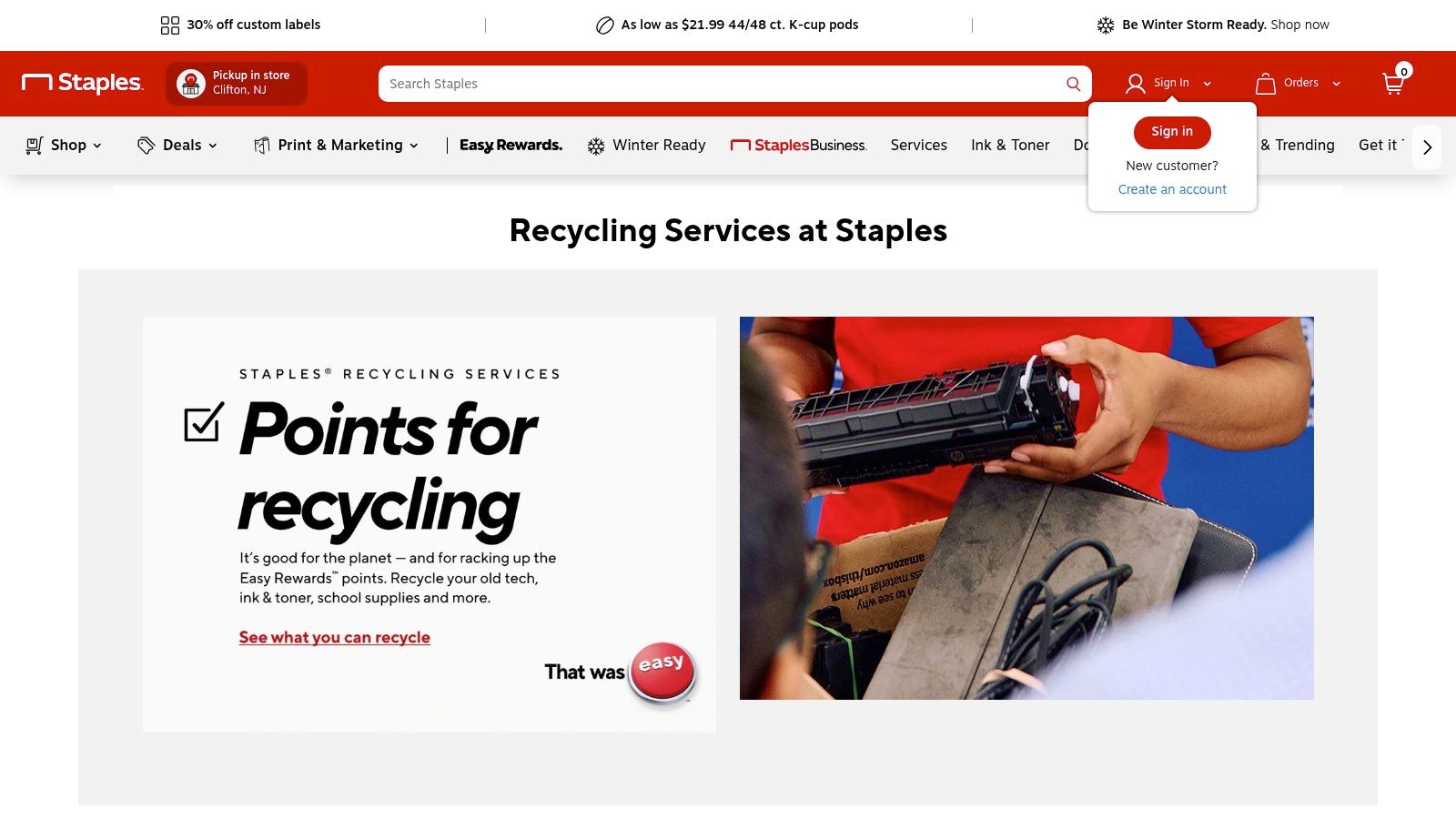
As a go-to resource for office supplies and business services, Staples extends its offerings to include convenient, free in-store recycling programs. This makes many of their retail locations excellent battery recycling drop off locations for small businesses. The program focuses on rechargeable batteries and small office electronics, integrating a sustainability effort directly into a place where companies frequently shop for new tech.
Key Features and Usage Tips
Staples' program is notable for its accessibility and for combining battery recycling with broader electronics take-back services. While primarily focused on rechargeable batteries (≤11 lbs) like Li-Ion and Ni-MH, many stores also accept a range of office tech. For businesses with larger needs, Staples Business Advantage offers structured recycling solutions, including mail-back boxes and pickup services, which are crucial for enterprise-level IT asset disposal.
Practical Tips:
- Confirm Acceptance: Before you go, it's wise to call your local Staples to confirm they participate and verify what specific items and battery types they currently accept.
- Adhere to Limits: Be aware of the daily limits on recycled items (often around seven items per customer per day) to ensure a smooth drop-off experience.
- Business Solutions: If you represent a business with more than just a few batteries, explore the mail-back and pickup programs through Staples Business Advantage for a more scalable and documented disposal process.
Website: https://www.staples.com/sbd/cre/noheader/sustainability-center/recycling-services/
11. Redwood Materials — Recycle With Us
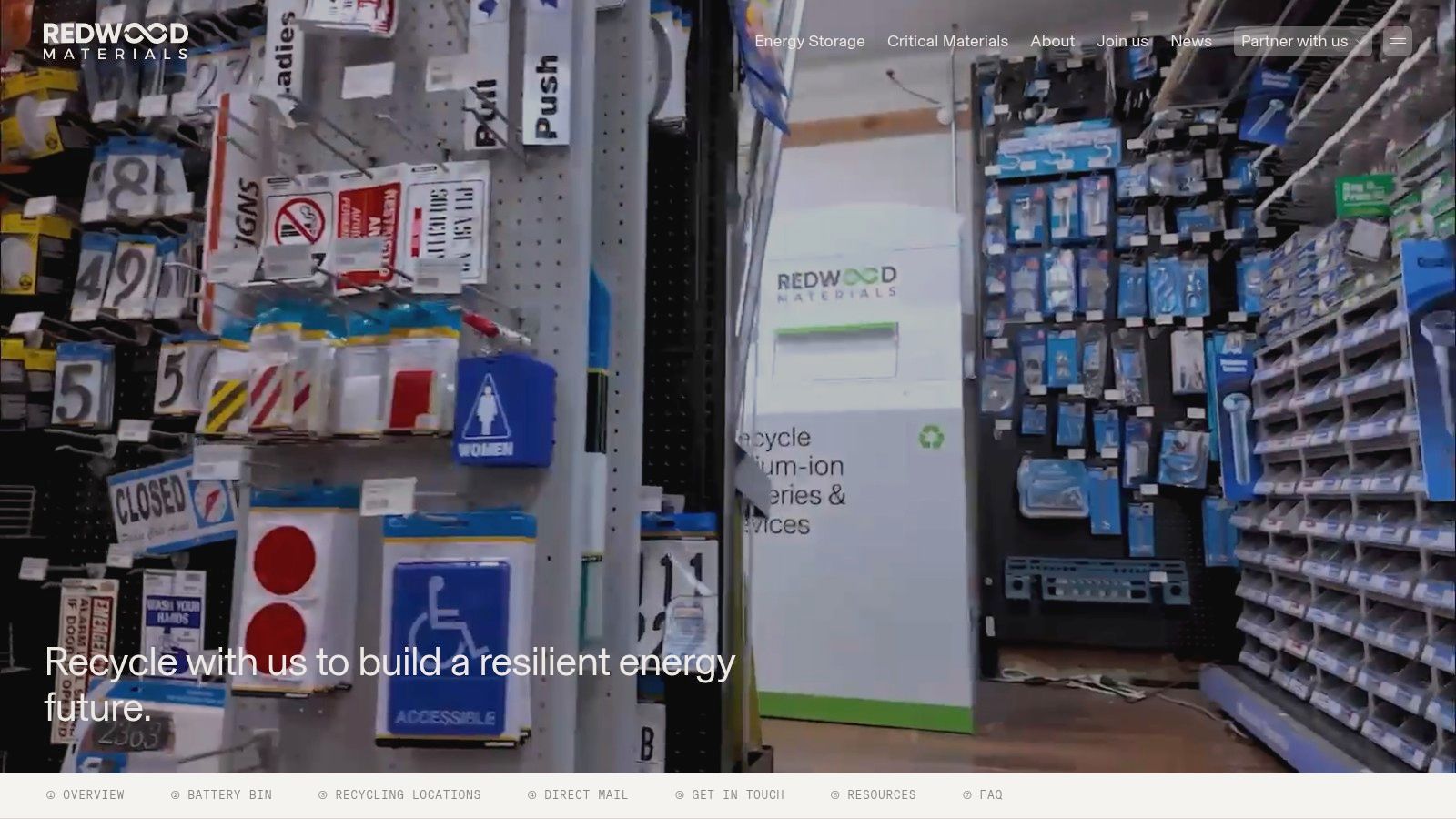
Redwood Materials is tackling the circular economy head-on with a program laser-focused on recovering critical materials from rechargeable devices and lithium-ion batteries. Their "Recycle With Us" initiative provides a growing network of battery recycling drop off locations specifically for these high-demand power sources. The platform is designed to make it simple for businesses to recycle old phones, laptops, and power tools, contributing directly to a domestic supply chain for new battery production.
Key Features and Usage Tips
The program's primary strength is its specific mission to reclaim valuable materials like lithium, cobalt, and nickel from electronics. Redwood Materials partners with various businesses and hosts collection events, which you can locate using their website's tool. For businesses without a nearby drop-off site, the company offers a convenient direct-mail option, providing a free, pre-paid shipping label to send in eligible devices.
Practical Tips:
- Focus on Li-ion: This program is purpose-built for lithium-ion batteries and devices containing them. It is generally not intended for single-use alkaline or lead-acid batteries.
- Check for Events: Keep an eye on their website for periodic community and business collection events in your area.
- Use the Mail-in Option: If the location finder shows no partners nearby, the free mail-back service is a secure and effective way to ensure your old electronics are responsibly recycled.
Website: https://www.redwoodmaterials.com/recycle-with-us/
12. Cirba Solutions — WeRecycle Battery Boxes
For businesses seeking a turnkey solution, especially when convenient battery recycling drop off locations are unavailable, Cirba Solutions offers its WeRecycle Battery Box program. This paid, mail-in service is designed for organizations that need to dispose of larger quantities or various types of batteries in a compliant and secure manner. The service provides a prepaid, certified box that includes everything needed for safe collection, packaging, and shipping directly to their processing facilities.
Key Features and Usage Tips
The primary advantage of the WeRecycle program is its simplicity and compliance for commercial clients. The cost covers the container, shipping both ways, and all recycling fees, making it a straightforward option for consolidating mixed-chemistry batteries (including alkaline, lithium, and Ni-Cd) without leaving the office. While this is a paid service, Cirba Solutions also provides a public-facing locator on its website to help users find partner drop-off sites, which sometimes include commercial locations.
Practical Tips:
- Best Use Case: Ideal for office cleanouts or for businesses in areas with limited recycling infrastructure. It simplifies the process for large volumes.
- Follow Instructions: The kit comes with specific DOT-compliant instructions for bagging and terminal protection. Follow these carefully to ensure safe shipping.
- Check the Locator First: Before purchasing a box, use the free locator on their site to see if a convenient partner drop-off point exists nearby.
Website: https://www.cirbasolutions.com
12-Provider Battery Drop-Off Comparison
| Service | Core features ✨ | Experience ★ | Value / Pricing 💰 | Target audience 👥 | USP / Notes |
|---|---|---|---|---|---|
| Beyond Surplus 🏆 | On-/off‑site HDD shredding, certified wiping, certificates, nationwide business pickup, buyback | ★★★★★ Fast, punctual crews; transparent chain‑of‑custody | Quote-based; some items free; value recovery via buyback | IT directors, data centers, healthcare, finance, gov, schools | Compliance-focused ITAD + local drop‑off (Smyrna) and full logistics ✨ |
| Call2Recycle | Drop‑off network, retailer partners, damaged Li‑ion guidance | ★★★★ Trusted nonprofit stewardship | Free at participating sites 💰 | Consumers, retailers, community programs | Massive retail coverage + safety protocols ✨ |
| Earth911 Recycling Search | Search by chemistry & ZIP; retailer & municipal listings | ★★★ Variable listing freshness; strong guides | Mostly free; call ahead for fees 💰 | Consumers seeking HHW, specialized local options | Chemistry‑specific search + editorial resources ✨ |
| The Home Depot | In‑store Call2Recycle bins (≤11 lb / ≤300 Wh), bagging guidance | ★★★★ Convenient retail locations | Free at bins 💰 | DIY homeowners, tool users | Easy retail drop‑off at store entrances ✨ |
| Lowe's | In‑store Call2Recycle bins; staff guidance | ★★★★ Convenient retailer network | Free at bins; verify store limits 💰 | Homeowners, contractors | Broad retail footprint + staff assistance ✨ |
| Batteries Plus | Accepts many chemistries incl. lead‑acid; business boxes & pickups | ★★★★ Specialist staff; flexible handling | Fees may apply for some types; business programs 💰 | Consumers & small businesses with specialty batteries | Wide chemistry acceptance + business services ✨ |
| AutoZone | Vehicle/ marine/ lawn lead‑acid take‑back; core refunds/incentives | ★★★ Convenient auto-side service | Core refunds & periodic incentives 💰 | Vehicle owners, repair shops | Auto battery testing & replacement support ✨ |
| O'Reilly Auto Parts | Free lead‑acid take‑back; $10 gift card for qualifying returns | ★★★ Nationwide access; published limits | Free + gift card incentives 💰 | Vehicle owners, DIY mechanics | Clear incentives and multi-service auto recycling ✨ |
| Advance Auto Parts | Core refunds + "battery bounty" gift cards; in-store testing | ★★★ Quick in‑store services | Gift card incentives (up to ~$10) 💰 | Vehicle owners needing replacements | Battery bounty program + same‑day services ✨ |
| Staples | Free rechargeable battery & small electronics drop‑off; business mail‑back | ★★★★ Office‑friendly; per‑day limits | Free for many rechargables; paid business options 💰 | Offices, small businesses, consumers | Business mail‑back & pickup programs ✨ |
| Redwood Materials — Recycle With Us | Li‑ion drop‑off locator, events, direct‑mail option | ★★★★ Li‑ion‑focused recovery | Mostly free at partners; mail options vary 💰 | Consumers with lithium‑ion devices | Purpose‑built Li‑ion material recovery network ✨ |
| Cirba Solutions — WeRecycle Battery Boxes | Prepaid mail‑in boxes for multiple chemistries, shipping & recycling | ★★★★ Turnkey & compliant logistics | Paid prepaid boxes (shipping included) 💰 | Households/orgs with limited local drop‑offs or bulk volumes | Turnkey cross‑chemistry mail‑in solution for bulk/remote needs ✨ |
Choosing Your Partner for Compliant Battery and E-Waste Disposal
Navigating the landscape of battery and electronics disposal can seem complex, but this guide has provided a comprehensive overview of the available battery recycling drop off locations and commercial services. We've explored a spectrum of solutions, from the convenience of retail chains for small-scale business needs to specialized mail-in programs from Cirba Solutions and Redwood Materials for larger or specific battery types. We also detailed how search aggregators like Earth911 and Call2Recycle can help find a nearby drop-off point.
However, for IT managers, data center operators, and compliance officers, the decision-making process extends beyond simple convenience. The core challenge for businesses is not just disposal, but ensuring a secure, documented, and compliant chain of custody for all IT assets, including the batteries they contain. While retail drop-offs are practical for incidental needs, they do not provide the necessary documentation, data destruction certificates, or liability protection that modern enterprises require. This is the critical differentiator that separates consumer-grade recycling from a professional IT Asset Disposition (ITAD) strategy.
Key Takeaways for Selecting Your Disposal Solution
Your final choice depends heavily on a few key variables: volume, battery chemistry, data security needs, and regulatory requirements.
For Low-Volume, Common Batteries: For small office needs involving standard Li-ion or Ni-Cd batteries, leveraging retail partners like Staples or Batteries Plus is an efficient solution. These programs are designed for ease of use and are perfect for managing used batteries from office peripherals.
For High-Volume or Specialized Batteries: Organizations decommissioning dozens of laptops, medical devices, or data center UPS units require a more robust solution. A certified e-waste recycler like Beyond Surplus offers the logistical capability to handle bulk pickups, manage complex battery chemistries, and ensure full compliance with EPA and DOT regulations for transport and processing.
For Data-Bearing Devices: The most critical consideration for any IT department is the data stored on the devices containing these batteries. Laptops, servers, and medical equipment must undergo certified data destruction before recycling. Retail drop-off programs offer no such guarantee. Partnering with an R2v3 or e-Stewards certified facility is non-negotiable to mitigate data breach risks and ensure your organization's legal and financial protection.
Actionable Next Steps for Your Organization
Before selecting a partner, conduct a quick internal audit. Catalog the types and approximate volume of batteries and electronic waste your organization generates quarterly. Identify which assets contain sensitive data. This simple step will immediately clarify whether a piecemeal retail approach is sufficient or if a comprehensive, certified ITAD partner is necessary.
Furthermore, as industries shift towards electrification, particularly in commercial vehicle fleets, the scale of battery recycling becomes a significant operational factor. Understanding the lifecycle and disposal pathways for large-format batteries is crucial for long-term planning. When planning for the eventual disposal of commercial EV batteries, it's also important to consider the potential for high-value components, often balancing against the overall UK EV battery replacement cost. This long-term perspective highlights the importance of partnering with recyclers who can manage a wide array of battery technologies.
Ultimately, responsible battery disposal is a direct reflection of your organization's commitment to environmental stewardship and data security. By choosing the right partner, you transform a logistical necessity into a strategic advantage, protecting your brand, your data, and the planet.
Contact Beyond Surplus for certified electronics recycling and secure IT asset disposal. We specialize in managing the complexities of corporate e-waste, from nationwide logistics and certified data destruction to responsible materials recycling. Partner with Beyond Surplus to ensure your asset retirement process meets the highest standards of security and environmental responsibility.