

That old IT equipment gathering dust in your Georgia office isn't just taking up space—it's a ticking clock of financial and legal risks. For business owners, IT managers, and facility professionals across the state, professional technology disposal services in Georgia are the answer, providing a secure, compliant, and eco-friendly way to handle end-of-life electronics. Instead of a liability, you can turn this process into a strategic move with a certified expert like Beyond Surplus, a leader in commercial and enterprise IT asset disposal.
Why Smart Businesses Use Technology Disposal Services in Georgia
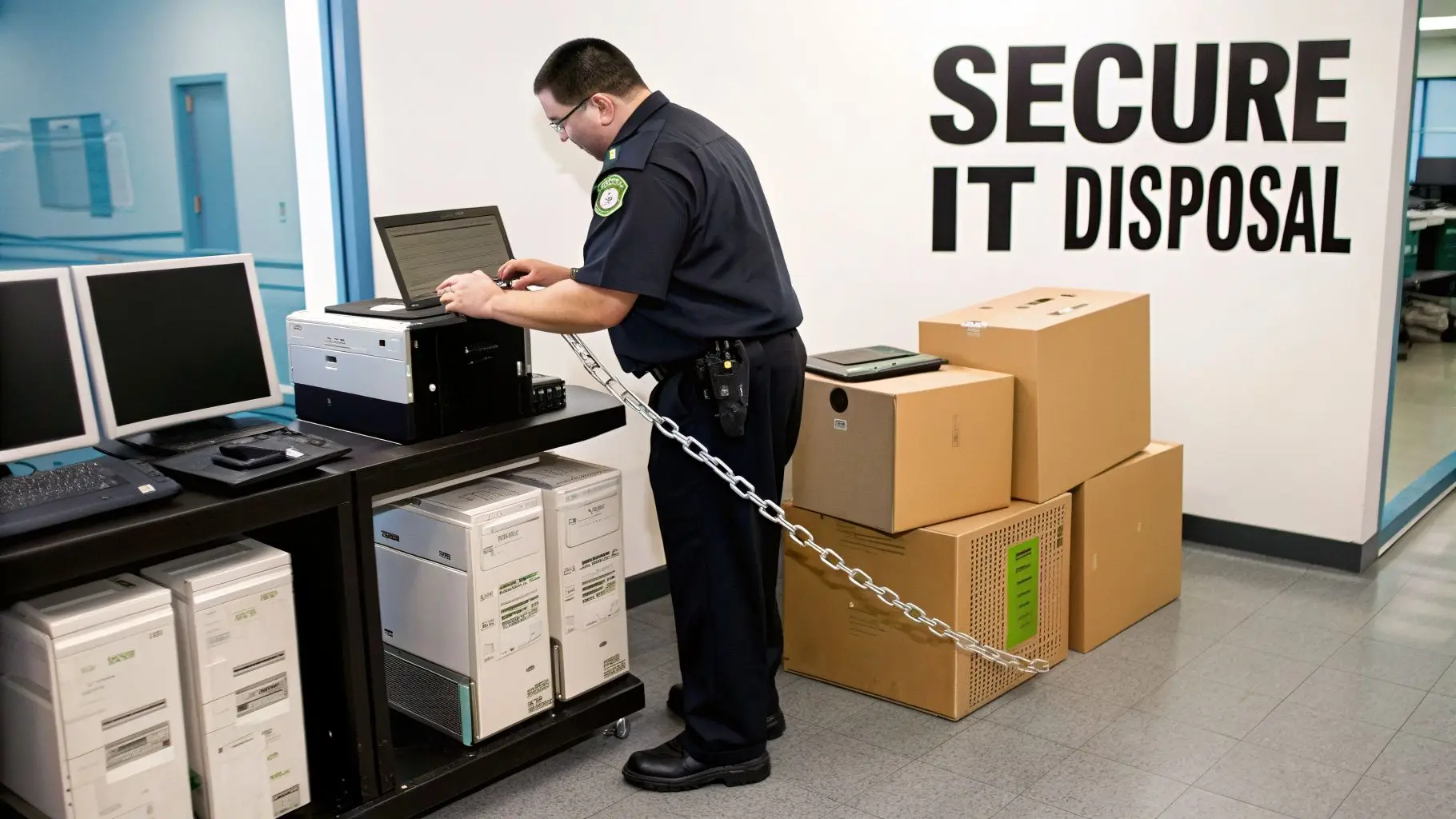
For any business in Georgia, that stack of old computers, servers, and monitors poses two major problems. First, it’s a treasure trove of sensitive data. Those discarded hard drives could still hold everything from customer lists and employee records to your most valuable company secrets. If that information gets into the wrong hands, the fallout can be devastating—think expensive data breaches, hefty regulatory fines, and a damaged reputation that’s hard to rebuild.
Second, all that gear is considered electronic waste (e-waste), and it's often full of hazardous materials like lead, mercury, and cadmium. Simply tossing it out isn’t just bad for the environment; it can violate federal laws like the Resource Conservation and Recovery Act (RCRA). This article focuses exclusively on commercial solutions and does not cover residential or household recycling.
From Liability to Strategic Asset
This is where professional technology disposal services, often called IT Asset Disposition (ITAD), come into play. Smart companies know that retired hardware isn't a problem to shove into a storage closet. It’s a process that needs an expert’s touch.
A certified ITAD partner transforms a logistical headache into a well-managed, risk-free process. They create a documented, secure, and compliant path for your retired assets, protecting your organization every step of the way.
Working with a certified specialist like Beyond Surplus gives you a clear, structured solution to these challenges. It’s no longer about just "getting rid of" old tech. It’s about a strategic plan that safeguards your business, focusing on:
- Data Security: Ensuring every bit of sensitive data is permanently destroyed using methods that meet NIST 800-88 standards. You receive a Certificate of Data Destruction as your legal proof that the job was done right.
- Environmental Compliance: Responsibly recycling all components according to federal and state environmental laws. This guarantees hazardous materials never enter a landfill.
- Value Recovery: Identifying equipment that still holds market value and creating an IT asset buyback program to return capital from your original investment.
When you hand this process over to a specialist, you're not just managing waste. You’re actively eliminating risk, guaranteeing compliance, and often unlocking hidden cash from your old equipment. This proactive stance shows your company is serious about corporate responsibility, giving you peace of mind and a real competitive advantage. To discuss your company's specific needs, contact Beyond Surplus for certified electronics recycling and secure IT asset disposal.
The Rising Tide of E-Waste in Georgia
Here in Georgia, the pace of technology is relentless, which is great for business but creates a huge backend challenge. Every server upgrade, laptop refresh, or new piece of lab equipment leaves behind a trail of obsolete gear. This isn't just old hardware piling up; it's a fast-growing mountain of electronic waste, or e-waste, that needs to be handled with care by a professional service.
This constant flow of outdated tech is a tricky problem. Unlike tossing old office paper, you can't just throw electronics in the dumpster. These devices are often packed with materials like lead, mercury, and cadmium. These are hazardous materials regulated at the federal level, and they pose a serious threat if they end up in our landfills.
The Scale of the E-Waste Problem
The sheer amount of e-waste being created is staggering, and it's only speeding up. This isn't just a local issue in cities like Atlanta or Savannah—it's a global problem with real financial and environmental costs. The demand for professional technology disposal services in Georgia is surging as more companies finally grasp the risks of doing it wrong.
The 2024 Global E-waste Monitor found that only 22.3% of e-waste was properly collected and recycled back in 2022. That number is expected to drop to just 20% by 2030, while the world churns out over 62 million tonnes of electronic junk every year.
This massive gap between what businesses discard and what gets recycled is a ticking time bomb. It’s no surprise the global electronic waste recycling market is projected to hit $86.10 billion by 2032. It's growing because the problem is growing, with e-waste generation outpacing recycling fivefold. Smart businesses are turning to certified experts to manage their old assets responsibly. You can explore the full electronic waste recycling market analysis to see the data for yourself.
Georgia's Unique Regulatory Landscape
For business owners and IT managers in the Peach State, the rules around e-waste can be confusing. Georgia is one of the states that doesn't have a statewide ban on businesses sending e-waste to landfills. This can create a false sense of security, making it seem like it's a free-for-all.
But it’s not. Federal laws are still in full effect, and they are strict. The EPA’s Resource Conservation and Recovery Act (RCRA) governs how hazardous materials—like those inside your old computers and servers—are disposed of. Breaking RCRA rules can lead to serious fines, no matter what Georgia's state-level policies are.
This creates a compliance puzzle where federal rules trump the lack of a state ban. For any Georgia business, cutting corners on disposal is a huge legal and financial gamble. The only safe and strategic move is to work with a certified ITAD provider who understands this complex regulatory picture. You can learn more about the consequences in our guide on the environmental impact of electronic waste.
Ultimately, that rising tide of e-waste isn't just an environmental problem; it’s a business risk. Proper disposal protects your company from fines, protects your brand’s reputation, and shows a real commitment to sustainability that clients and partners notice. The best way to handle it all is through professional technology disposal services in Georgia that are built for commercial compliance.
Data Destruction Is Your First Line of Defense
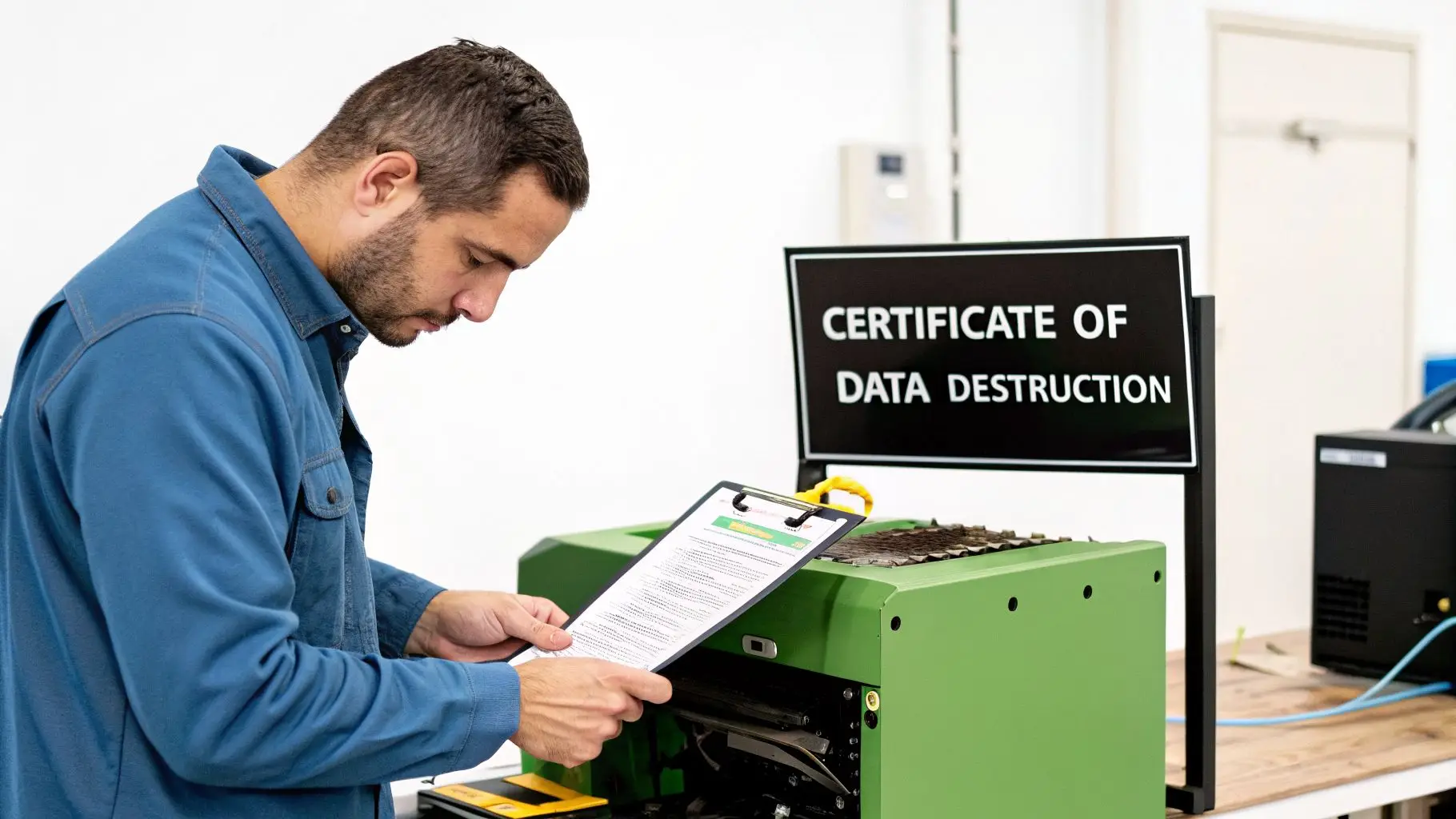
For any Georgia business getting rid of old technology, data security isn't just a suggestion—it’s the most important step you’ll take. That retired server or stack of old company laptops can be a treasure trove for the wrong people. Each device might still hold sensitive customer information, financial records, employee PII, or your company's trade secrets.
Many people think deleting files or reformatting a hard drive is enough. It's not. This creates a false sense of security because commercially available software can easily recover "erased" data, leaving your business wide open to risk. One breach from a poorly handled device can lead to a world of trouble.
The Real-World Consequences of a Data Breach
The fallout from a data leak is far more than just an IT problem. For businesses here in Georgia, the stakes are incredibly high, involving massive regulatory fines, messy legal battles, and a loss of customer trust that can take years, if ever, to get back.
A breach can put you on the wrong side of federal and state data privacy laws like the FTC Disposal Rule, HIPAA for healthcare data, or GLBA for financial information. The financial hit can be devastating, but the damage to your brand’s reputation is often much worse.
A data breach is not just a loss of information; it's a fundamental breach of trust. When customers feel their data isn't safe with you, they will take their business to a competitor who prioritizes security.
Professional technology disposal services in Georgia take this risk off your plate by making secure data destruction the first and most critical step.
Methods for Permanent and Verifiable Data Erasure
To truly protect your business, that old data needs to be gone for good and completely unrecoverable. Certified ITAD providers use methods that follow strict industry standards, especially the guidelines from the National Institute of Standards and Technology (NIST) in its Special Publication 800-88.
These are the proven methods that guarantee total data removal:
- Physical Shredding: This is the most straightforward and final way to destroy data. Hard drives, SSDs, and other media are put into industrial shredders that grind them into tiny, useless pieces. It’s the perfect end for devices that are no longer functional.
- Cryptographic Erasure: For newer devices with built-in encryption, like most modern SSDs, this is a slick and highly effective technique. The process simply erases the encryption key, which instantly makes all the data on the drive unreadable—essentially turning it into digital gibberish.
- Certified Data Wiping: This approach uses special software to overwrite the entire drive with random patterns of 1s and 0s over and over again. This process makes sure the original data can't be put back together, even with advanced forensic tools.
For businesses that need to see it to believe it, Beyond Surplus offers both on-site and off-site shredding. Our mobile shredding trucks can come right to your facility in Georgia, letting you watch the destruction happen. For a full breakdown of our process, you can explore the details of our certified data destruction services in Georgia. It's also important for companies to understand the formal protocols for a request for data deletion to ensure all legal and ethical duties are covered.
The Power of the Certificate of Data Destruction
Once the destruction is finished, a certified ITAD partner gives you a Certificate of Data Destruction. This document is much more than a receipt; it's your official, legal proof that you handled everything correctly.
This certificate acts as an official record detailing:
- The specific devices that were destroyed, often including serial numbers.
- The destruction method used (e.g., shredding, wiping).
- The date and location of the destruction.
- A unique reference number for tracking and auditing.
By providing this documented chain of custody, the Certificate of Data Destruction effectively transfers liability from your company to the disposal vendor. It shows you did your due diligence and gives you the paperwork needed to pass any regulatory audit, giving your business complete peace of mind.
Navigating E-Waste Regulations in Georgia
For any business in Georgia, figuring out the rules for technology disposal can feel like navigating a maze. The regulations are a tricky mix of strict federal mandates and a more hands-off state approach, which often leads to confusion. But getting this right isn't just a good idea—it’s a critical part of protecting your business from serious legal trouble and hefty fines.
A common myth we hear is that Georgia’s lack of a statewide electronics landfill ban gives companies a free pass to toss old IT gear however they want. That's a risky—and incorrect—assumption. While Georgia's own policies might be voluntary, federal laws are not, and they always come first. These aren't just suggestions; they are enforceable rules that hold your business accountable.
Federal Mandates You Cannot Ignore
Two major federal regulations set the foundation for compliant IT disposal for any Georgia business. Ignoring them can lead to crippling fines and irreversible damage to your company’s reputation. Any professional partner specializing in technology disposal services in Georgia builds their entire process around sticking to these critical laws.
Here are the federal rules you absolutely must follow:
- The FTC Disposal Rule: This one is all about data security. It requires businesses to take "reasonable measures" to protect sensitive consumer information when getting rid of old equipment. Just hitting 'delete' on a file doesn’t cut it. The rule demands that data on old hard drives and other media be made completely unreadable and impossible to recover.
- The Resource Conservation and Recovery Act (RCRA): Managed by the EPA, RCRA treats many electronic components as hazardous waste. Think old CRT monitors, circuit boards, and batteries containing lead, mercury, or cadmium. This law strictly forbids dumping these items in standard municipal landfills.
To give you a better overview, here's a table summarizing the key regulations that impact technology disposal in Georgia.
Key Regulations for Technology Disposal in Georgia
| Regulation | Governing Body | Core Requirement for Businesses |
|---|---|---|
| FTC Disposal Rule | Federal Trade Commission (FTC) | Mandates secure destruction of sensitive consumer data on all discarded media to prevent data breaches. |
| RCRA | Environmental Protection Agency (EPA) | Classifies certain electronics as hazardous waste, prohibiting their disposal in municipal landfills. |
| HIPAA | Dept. of Health & Human Services | Requires strict protection and secure disposal of all electronic Protected Health Information (ePHI). |
| FACTA | Federal Government | Obligates businesses to destroy consumer information on discarded records to prevent identity theft. |
These regulations form a non-negotiable baseline for any business. Partnering with a certified ITAD provider ensures you're covered on all fronts, with documented processes to prove compliance.
Georgia's E-Waste Reality
The sheer volume of electronic waste in Georgia is a growing problem, making responsible disposal more important than ever. Back in 2014, the state generated about 21,000 tons of e-waste. By 2027, that number is projected to explode to 52,000 tonnes, thanks to a compound annual growth rate of 12.5% for devices like computers and printers. You can explore the full details in these e-waste flow projections and their implications for the state.
Despite this surge, Georgia’s recycling framework for commercial entities is still largely voluntary. There are no state-level laws forcing manufacturers to take back products or banning business electronics from landfills, although some counties do offer local drop-off points (primarily for residents).
This regulatory patchwork is precisely why working with a certified ITAD expert is so important. A partner like Beyond Surplus handles all the complexity for you, making sure every single piece of equipment is processed in full compliance with all federal and local rules.
This unique situation—strong federal laws paired with a lack of statewide mandates—creates a confusing environment where businesses can easily make expensive mistakes. For instance, while Georgia doesn't have a landfill ban, federal RCRA laws still make it illegal to trash a pallet of old office computers. Likewise, the FTC Disposal Rule holds you responsible for a data breach from a discarded hard drive, no matter what Georgia's policies are. You can learn more about proper data sanitization in our guide on NIST SP 800-88 standards.
Ultimately, compliance isn't just about dodging fines. It's about protecting your brand, securing your data, and showing you’re a responsible corporate citizen. A certified ITAD provider takes the guesswork out of the equation, giving you a clear, documented process that keeps your business safe.
So, what does a professional technology disposal process actually look like? It’s more than just hauling away old equipment. It's a carefully planned operation designed to protect your business at every step, covering security, compliance, and sustainability. Let's walk through how your retired assets are handled from start to finish, using industry best practices as our guide.
The journey starts with a simple consultation to figure out what you have, your data security needs, and any logistical challenges. You’ll get a clear, itemized quote outlining all services, from secure data destruction to electronics recycling, so there are no surprises down the road.
The First Step: Consultation and Secure Logistics
Once you have a plan, the next move is scheduling a secure pickup. For businesses in Georgia and across the country, this is where the chain of custody begins—and it's a critical moment. A professional service uses its own fleet and trained, uniformed staff to collect assets right from your facility, whether it's an Atlanta office or a remote data center.
Every single asset is inventoried on-site before it’s loaded into a locked, GPS-tracked truck. This creates a solid, documented trail from your door to the secure processing facility. That level of control is essential for compliance and gives you complete peace of mind.
A professional ITAD process isn't just about pickup and disposal; it's a security operation from the moment assets leave your sight. The secure chain of custody is your first and best defense against data loss, theft, and breaches.
This structured approach is why the U.S. Electronic Goods Recycling industry has seen a steady 4.8% compound annual growth rate from 2020 to 2025. As companies wake up to the risks of improper disposal, they're turning to the 863 specialized businesses in this field to ensure it’s done right. You can read more about the trends shaping the electronic goods recycling industry on ibisworld.com to get a better sense of this shift.
Processing, Destruction, and Final Documentation
When your assets arrive at a secure, access-controlled facility, they are checked against the original inventory list. Anything containing data is immediately pulled aside for destruction. You can usually choose the method that best fits your company's security policy:
- On-Site Shredding: A mobile shredding truck comes directly to your Georgia location to physically destroy hard drives and other media while you watch.
- Off-Site Shredding: Devices are destroyed in a secure facility, and the entire process is recorded so you can verify it happened.
- Certified Data Wiping: For assets that can be reused, data is completely erased using software that meets or exceeds NIST 800-88 standards.
After the data is gone, the focus turns to sustainability. Non-reusable materials are de-manufactured, and components like plastic, metal, and glass are sorted for recycling. Here at Beyond Surplus, we are committed to a zero-landfill policy for all electronics we manage, ensuring every part is handled responsibly. To see what that looks like in practice, you can explore our guide to environmentally responsible recycling in Georgia.
This flowchart shows how Georgia businesses must navigate federal and local rules for proper e-waste disposal.
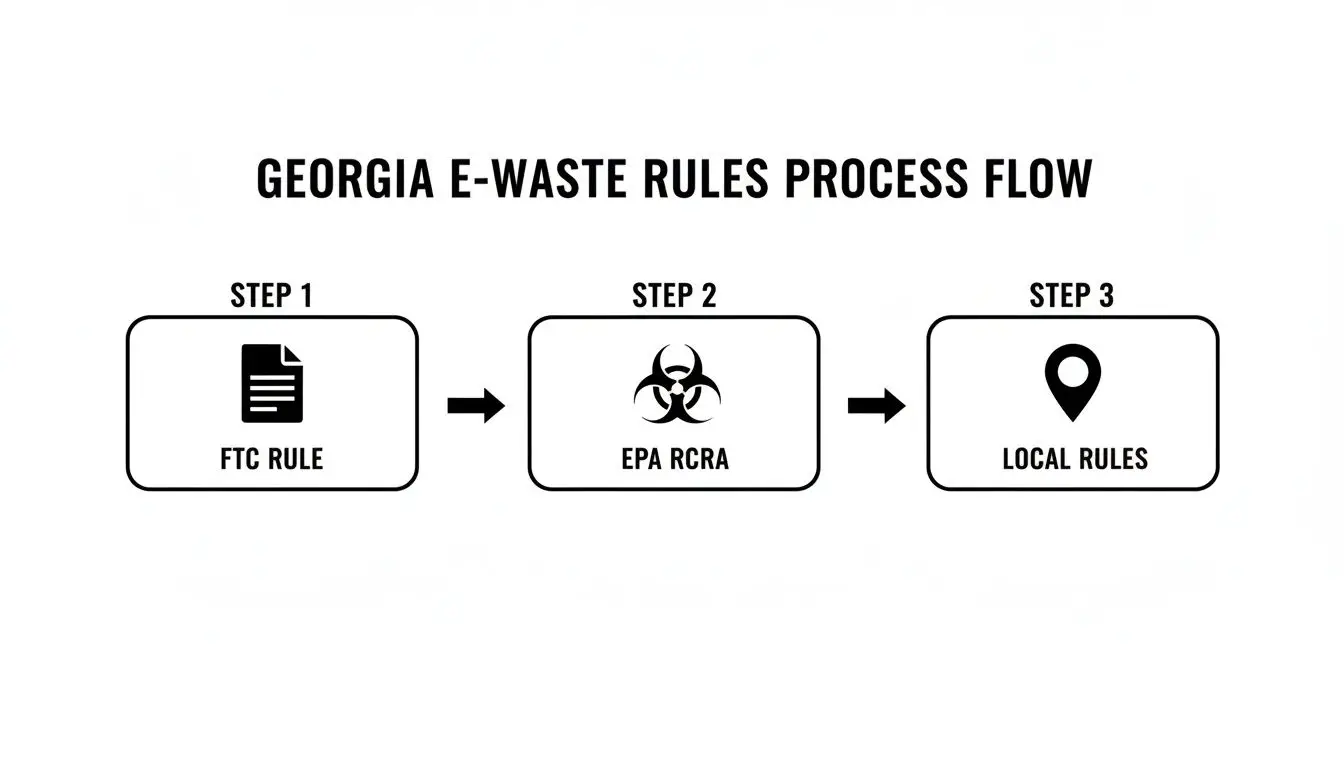
As you can see, compliance is a multi-layered process. It starts with federal data security rules like the FTC Safeguards Rule and environmental laws like the EPA's RCRA, but you also have to consider any local ordinances that apply.
The final—and arguably most important—step is the paperwork. You’ll receive a Certificate of Data Destruction and a Certificate of Recycling. These legal documents are your official proof of compliance, showing you took all the right steps to protect data and dispose of e-waste responsibly. This effectively transfers the liability to your certified partner, turning a complex risk into a simple, secure, and sustainable solution.
How to Choose the Right Disposal Partner in Georgia
Choosing a partner to handle your company's old tech is a bigger deal than you might think. The difference between a certified pro and some random "recycler" can mean the difference between total compliance and facing serious legal and financial trouble. Making the right call here protects your data, your brand, and your budget.
Think of it less like hiring a junk removal service and more like bringing on a partner to manage risk. Going with the cheapest option often comes with hidden costs later, from data breach clean-ups to big fines. A careful, thorough vetting process is your best defense.
Key Certifications to Look For
When you start looking at partners for technology disposal services in Georgia, certifications are your first and most important quality check. These aren't just fancy logos for a website; they are hard-earned proof that a company has passed strict, independent audits of its security, environmental practices, and operations.
The presence of R2v3 or e-Stewards certification is a non-negotiable starting point. It's the clearest indicator that a vendor is serious about security, transparency, and responsible handling of your assets.
There are two main certifications you absolutely want to see:
- R2v3 (Responsible Recycling): This is the latest and most thorough standard in the industry. An R2v3-certified company has to prove it has a secure chain of custody, solid data destruction methods, and processes to test, fix, and reuse gear before simply recycling it.
- e-Stewards: This standard puts a heavy emphasis on environmental safety. It strictly forbids shipping hazardous e-waste to developing countries or dumping it in landfills, and it also requires tough data security protocols.
A provider without these credentials is an unknown quantity. You're left hoping your data was really destroyed and your old equipment didn't just end up in a landfill somewhere.
Essential Questions for Vetting Providers
Certifications are a great start, but you need to dig a little deeper to really understand what a vendor can do. A reputable partner will have clear, confident answers to your questions. While your main concern is secure technology disposal, many businesses also need a full range of waste solutions. As you check out potential partners, look at the variety of general waste management services they offer, as this can show their broader operational strength.
Here’s a quick checklist of questions to ask any potential partner:
- Chain of Custody: Can you walk me through your chain of custody, from pickup to final disposal? How is every step documented?
- Data Destruction: What specific methods do you use for destroying data, like shredding or wiping? Do they meet NIST 800-88 standards? Can you shred hard drives at our office?
- Insurance: What types of insurance do you have, and what are the coverage limits? Be sure to ask about pollution liability and data breach/cyber liability insurance.
- Reporting: What kind of paperwork will we get back? You should always get a Certificate of Data Destruction and a Certificate of Recycling that lists the serial numbers of your assets.
- Downstream Vendors: How do you vet your own recycling partners? Can you confirm they are also certified and compliant?
Asking these questions will help you quickly tell the true ITAD professionals from the simple scrap collectors. For more help comparing your options, check out our guide on choosing between IT asset disposition companies. Making a smart, informed choice is the best way to ensure your technology disposal is low-risk and fully compliant.
Frequently Asked Questions About Technology Disposal
When it's time to deal with old tech, Georgia businesses often have a lot of the same questions. This section cuts through the noise to give you direct answers about security, compliance, and the practical steps for handling your outdated IT assets.
Does My Small Business in Georgia Really Need Professional Disposal Services?
Yes, without a doubt. Every business, no matter its size, has a legal obligation to follow data privacy laws like the FTC Disposal Rule. Just one old hard drive with sensitive customer or employee data can spiral into massive fines, lawsuits, and damage to your reputation that’s hard to fix.
Professional technology disposal services in Georgia, like what we offer at Beyond Surplus, give you certified data destruction and a documented chain of custody. That paperwork is your legal proof of compliance, shifting the liability away from you and protecting your business. We offer scalable solutions designed specifically for commercial clients, making secure disposal both affordable and easy.
What Is the Difference Between Recycling and Secure IT Asset Disposition?
While they sound similar, standard electronics recycling and secure IT Asset Disposition (ITAD) are worlds apart. A regular recycler’s main job is to break down equipment into raw materials for reuse. That process often overlooks the strict, certified data destruction your business needs to stay protected.
Secure ITAD is a complete, security-first process. The absolute priority is to sanitize or physically destroy all data on every device, following strict NIST 800-88 standards, before anything gets recycled or resold.
A certified ITAD partner like Beyond Surplus makes sure every laptop, server, or phone is forensically wiped or shredded. We then issue a Certificate of Data Destruction to prove it. Only after we’ve guaranteed your data is gone forever do we move on to responsible recycling and getting value back from the hardware.
Can We Get Any Money Back for Our Old Equipment?
Absolutely. Getting a return on retired assets is one of the biggest upsides of a professional ITAD program. Beyond Surplus has strong IT asset buyback programs that can put a good chunk of your original technology investment back in your pocket.
Our team evaluates your inventory of retired but still-working equipment, like newer laptops, servers, and networking gear. We offer fair market value for these items, which you can use to offset disposal costs or pour right back into your IT budget. It's a great way to turn old tech from a headache into a real financial asset for your business.
How Do I Get Started With Disposing of My Old Tech?
Getting the ball rolling is straightforward. The first step is to reach out to a certified and experienced provider like Beyond Surplus. You can give our team a call or fill out a form on our website to start the conversation.
We’ll work with you to get a handle on your inventory, security needs, and logistics. From there, we’ll give you a clear quote and a solid plan, whether you need a simple pickup at your Atlanta office or a full-scale data center cleanout. Our team takes care of all the heavy lifting, paperwork, and compliance so the entire process is smooth and worry-free for you.
Contact Beyond Surplus for certified electronics recycling and secure IT asset disposal. We provide certified, secure, and sustainable technology disposal services for businesses across Georgia and nationwide. Learn more at https://sonitechllc.com.


