
Think of the universal waste system as an express lane for recycling common hazardous items. For businesses in the United States, it's the EPA's way of creating a simpler, more cost-effective path to properly manage materials like batteries, lamps, and, in many states, electronics (e-waste). This guide is for business owners, IT managers, and facility managers looking for compliant commercial disposal solutions.
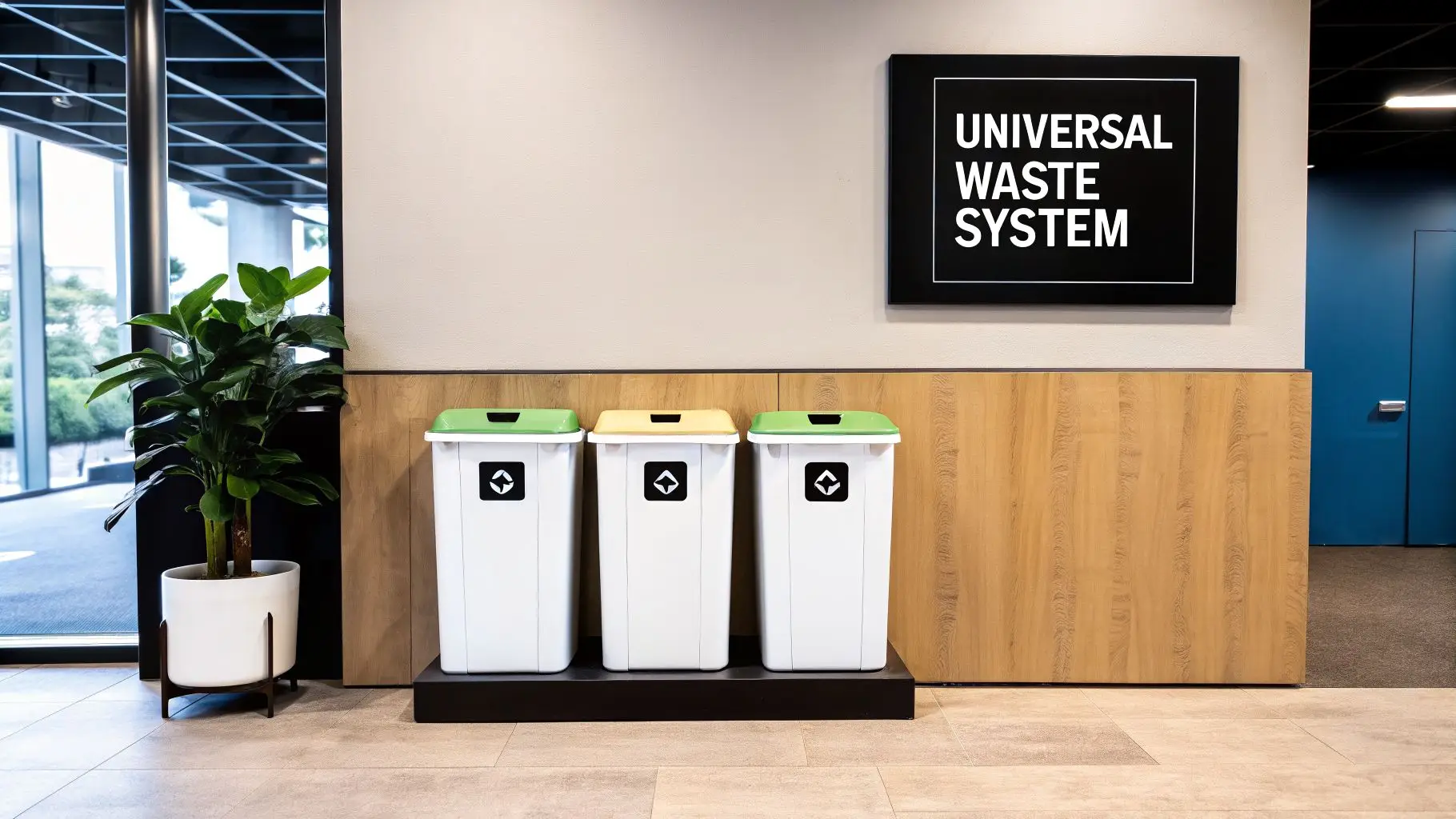
This system allows your business to bypass the complex maze of standard hazardous waste regulations for specific materials. The main goal is to encourage compliant recycling by cutting down the paperwork and red tape, making it much easier for IT managers and facility operators to manage e-waste and other regulated items.
Essentially, the universal waste system reclassifies common hazardous items so they can be managed with fewer, less-stringent rules. This is a huge benefit for any business dealing with expired uninterruptible power supplies (UPS), old fluorescent bulbs from an office building, or retired IT equipment from a data center.
Key Benefits for Your Business
Adopting a universal waste program offers immediate, practical advantages that make a real difference in your commercial operations and budget.
- Slash Administrative Costs: The program simplifies the need for detailed tracking, manifests, and reporting, saving your team significant time and money.
- Get More Accumulation Time: You can store universal waste on-site for up to one year. This gives your business ample time to schedule cost-effective, bulk pickups, unlike the strict 90- or 180-day limits for standard hazardous waste.
- Simplify Employee Training: The training required for employees who handle universal waste is far less intensive than what's needed for fully regulated hazardous waste, focusing on proper handling and emergency procedures.
It’s the difference between mailing a standard business package and shipping a highly controlled substance. The universal waste system provides a straightforward, pre-approved process for items the EPA wants to keep out of landfills but doesn’t want to bury in regulatory paperwork for commercial generators.
The EPA created the Universal Waste Rule to promote the collection and recycling of certain widely generated hazardous wastes. By easing the regulatory burden on businesses, the system encourages companies to keep these materials out of municipal solid waste landfills.
Universal Waste vs Standard Hazardous Waste Management
To fully grasp the benefits, it helps to see the two systems side-by-side. Managing waste under the standard Resource Conservation and Recovery Act (RCRA) involves a host of complex steps, from obtaining an EPA ID number to using certified transporters and keeping meticulous records. The universal waste system is a welcome relief for businesses.
The table below breaks down the key differences, showing just how much simpler universal waste management can be for commercial entities.
| Compliance Aspect | Universal Waste System (The Express Lane) | Standard Hazardous Waste (RCRA Subtitle C) |
|---|---|---|
| EPA ID Number | Not required for small quantities | Required for generators of certain quantities |
| On-Site Accumulation | Up to one year | 90 or 180 days |
| Tracking/Manifests | Basic log or record-keeping is sufficient | Uniform Hazardous Waste Manifest required for transport |
| Transport | Can use a common carrier | Must use a registered hazardous waste transporter |
| Employee Training | Basic training on proper handling and emergencies | Extensive, role-specific training required |
| Reporting | Generally not required | Biennial reporting may be required |
As you can see, the universal waste system streamlines nearly every aspect of waste management, from storage to shipping, specifically for business needs.
These distinctions are critical for building an effective and compliant electronics disposal strategy. To dive deeper, check out our complete guide on managing universal waste for businesses. This approach not only ensures compliance but also builds a more sustainable and secure foundation for your IT asset lifecycle.
Spotting Universal Waste in Your Facility
Your business almost certainly has universal waste on-site, often in plain sight. Many facility managers and IT professionals don't realize that common items fall under these special regulations, but conducting a thorough inventory is the first step toward compliance.
Think of it as a professional audit of your own building. You're not just looking for "junk"; you're pinpointing specific commercial equipment that requires special handling under federal or state universal waste rules. This is especially important for electronics, where regulations can be complex.
The Federal Categories of Universal Waste
The U.S. EPA sets the baseline for what qualifies as universal waste. A quick walk through your office, server room, or warehouse will almost certainly turn up items from these four core categories.
- Batteries: This is a major category for businesses. You'll find them everywhere—from the lead-acid batteries in your data center's uninterruptible power supplies (UPS) to the lithium-ion batteries in laptops and the alkaline batteries in keyboards and mice.
- Pesticides: While less common in a standard office, any commercial facility with its own groundskeeping or maintenance crews might have old, recalled, or banned pesticides that qualify.
- Mercury-Containing Equipment: Many older commercial buildings still have these items. Look for old thermostats, pressure gauges, and certain types of electrical switches and relays.
- Lamps: This isn't just about the long fluorescent tubes in the ceiling. It also includes compact fluorescent lamps (CFLs), high-intensity discharge (HID) lamps from warehouses, and many other bulbs that contain small amounts of mercury.
Once you’ve identified these items, you know they cannot be discarded in the regular trash. They must be managed under the simpler universal waste rules, which is the first step toward building a solid corporate disposal plan.
How States Expand the Rules for E-Waste
This is where compliance becomes more challenging for multi-state businesses. While the federal government provides a baseline, many states have expanded their own definitions of universal waste, most often to include electronic devices, or e-waste. States like California, Washington, and Illinois have specific rules that treat nearly all business electronics as universal waste.
For companies operating in these states, the list of items to track gets much longer. Your inventory should now include:
- Desktop computers and laptops
- Monitors (both old CRTs and modern flat-panels)
- Printers, scanners, and copiers
- Servers and networking gear from data centers
- Business telephone systems and mobile phones
- Keyboards, mice, and other peripherals
These items are regulated for good reason. They're packed with hazardous materials like lead, mercury, cadmium, and flame retardants. If they end up in a landfill, those toxins can cause serious environmental damage and lead to significant corporate fines.
The primary reason states regulate e-waste so carefully is to prevent toxic heavy metals from leaching into soil and groundwater. A single old CRT monitor from an office can contain several pounds of lead, making proper disposal an absolute necessity.
By understanding both federal rules and any state-specific additions, you can perform a proper facility walkthrough. Check everywhere—server rooms, storage closets, maintenance shops, and individual workstations. Documenting every regulated item, from a single laptop battery to a pallet of old servers, gives you the clear inventory needed for a compliant and effective management strategy. Once you've identified these materials, remember to manage related items properly. For instance, you can look into responsible options for scrap metal and power supply recycling to ensure every component is handled correctly.
Mastering the Core Rules of Universal Waste Management
Knowing what universal waste is is the first hurdle; managing it correctly is what ensures compliance. This is where a clear, step-by-step playbook becomes invaluable for your business. Let's break down the three core components you need to get right: safe storage, proper labeling, and strict accumulation timelines. Think of this as your hands-on guide for building a compliant program from the ground up.
The flowchart below shows how everyday business items are identified before entering a universal waste program.
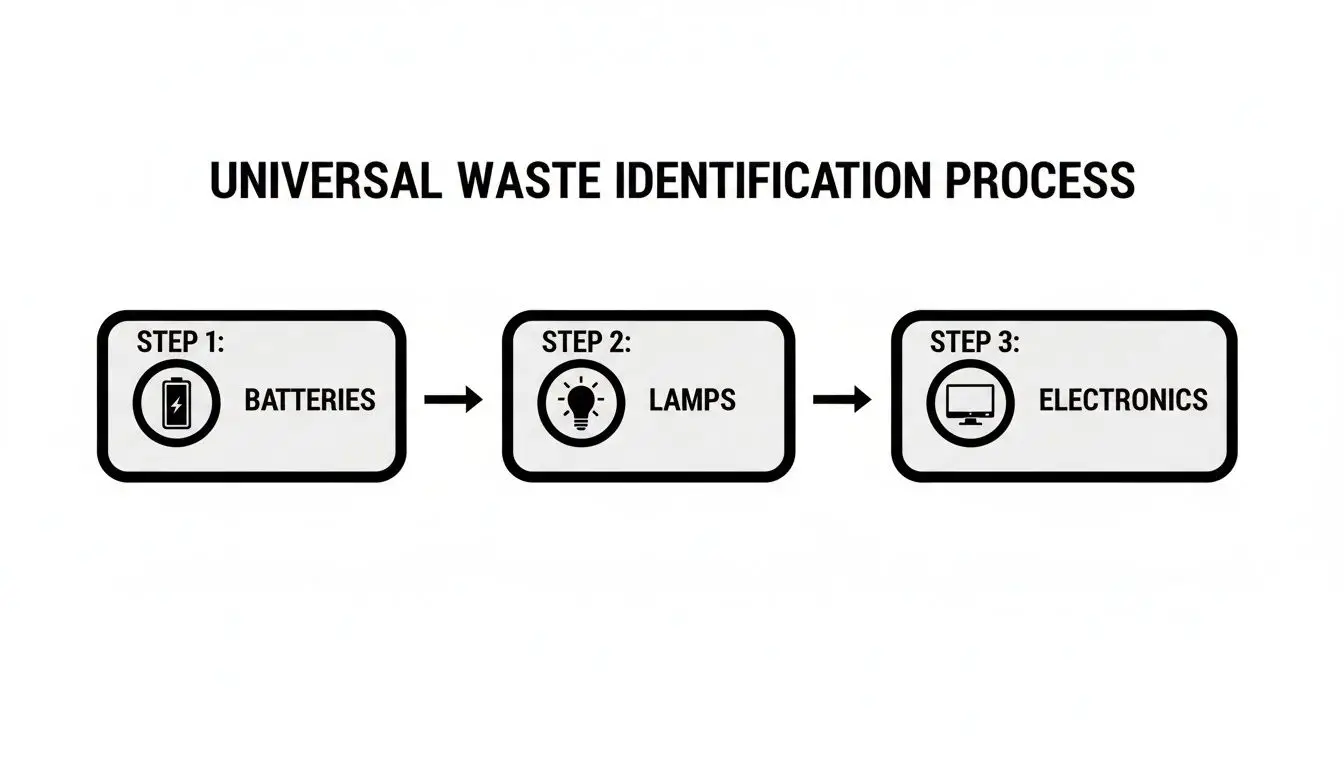
This visual gives your staff a simple path to follow, helping them correctly sort items like spent batteries, old fluorescent bulbs, and retired electronics into the right waste stream.
Safe and Secure On-Site Storage
Properly storing universal waste isn't just a good practice—it’s essential for workplace safety and regulatory compliance. The main goal is to contain everything in a way that prevents leaks, spills, or any other release into the environment.
A common mistake is simply piling old equipment in a storage closet, but that is not a compliant solution. Your facility needs designated accumulation areas for each type of universal waste.
For example, batteries must be stored in non-conductive containers to prevent short-circuiting, which could cause a fire. A sturdy plastic bin or a fiberboard drum works perfectly. Ensure the container is closed and protected from the elements.
Lamps, especially fragile fluorescent tubes, require careful handling. The best practice is to keep them in their original boxes or dedicated fiberboard containers to prevent breakage. A broken lamp releases mercury vapor, creating an immediate health and environmental hazard that requires a costly cleanup.
Key Takeaway: The core principle of universal waste storage is containment. Your containers must be closed, structurally sound, and compatible with the type of waste they hold to prevent any accidental release.
The Importance of Clear Labeling
Once your waste is stored safely, you must label it clearly. This isn’t a suggestion; it's a federal requirement that helps everyone, from your own team to your recycling partner, know exactly what's inside a container.
The label needs to clearly state one of these three options:
- "Universal Waste—[Type of Waste]" (e.g., "Universal Waste—Batteries")
- "Waste [Type of Waste]" (e.g., "Waste Lamps")
- "Used [Type of Waste]" (e.g., "Used Mercury-Containing Equipment")
Every container must also be marked with the date you started accumulating the waste. This is crucial because it starts the clock on your one-year storage limit. For any large organization, this organized approach is non-negotiable. The global waste management market, which includes universal systems for e-waste, hit USD 1.36 trillion in 2024 and is expected to reach USD 2.33 trillion by 2034. This growth is fueled by urbanization and tough sustainability mandates, showing why businesses must have solid IT asset disposition practices. You can read the full research on the waste management market to get a better handle on these trends.
Understanding the Accumulation Clock
The universal waste system gives businesses a significant advantage over standard hazardous waste rules: you can accumulate universal waste on-site for up to one year. This one-year "accumulation clock" begins the moment the very first piece of waste goes into its designated container.
This extended timeframe is designed for business practicality. It gives your company the flexibility to gather enough material to make a pickup from a certified recycling partner like Beyond Surplus both logistically and financially worthwhile. You avoid the pressure of the much shorter 90- or 180-day deadlines that come with RCRA hazardous waste.
Of course, you must be able to prove how long the waste has been on-site, which is why dating your containers is so important. Common methods for tracking accumulation dates include:
- Marking the container itself with the start date.
- Keeping an inventory log for each accumulation area.
- Labeling individual items as they are added to the container.
By mastering storage, labeling, and timelines, you build a solid framework for compliance. To make your program even stronger, it helps to understand the certifications that validate a recycler’s process. You might want to check out our overview of key electronics recycling certifications, which ensure your partner meets the highest industry standards for security and environmental protection.
Navigating Federal and State-Specific Regulations
One of the biggest compliance traps for any business managing e-waste is assuming the federal universal waste rules are the final word. They are not. In fact, the EPA’s regulations are merely the starting point.
Individual states have the authority to set their own, stricter standards or add entirely new categories of waste to their programs. This has created a complex and varied regulatory landscape across the United States, and it’s easy for businesses to get tripped up.
This patchwork of laws creates real compliance risks, especially for any company with facilities in more than one state. A business in California faces a completely different set of rules for electronics disposal than one in Texas or Florida. Getting these local details right isn't just about avoiding red tape—it's about preventing serious financial penalties and legal liability.
The Federal Baseline
The U.S. EPA establishes the foundation for the universal waste system. As we've covered, this includes four main categories: batteries, pesticides, mercury-containing equipment, and lamps. These federal rules are designed to be the minimum standard that every state must meet.
But the system was intentionally built to be flexible, allowing states to adapt the rules to fit their own environmental challenges and policy goals. This is precisely why a one-size-fits-all approach is insufficient for your company's waste management program.
How States Go Further
Many states have taken this flexibility and run with it, expanding their universal waste programs in significant ways. The most common addition for businesses? All electronic devices, or e-waste. This is a critical distinction for any IT manager or facility operator to grasp.
Here are a few common ways state rules can be stricter than the federal baseline:
- Expanded Waste Categories: States like California, Washington, and Illinois now treat nearly all electronics as universal waste. This means everything from servers and laptops to printers and monitors falls under these specific rules. You can dive deeper into this by reading our guide on compliant California electronics recycling.
- Stricter Labeling Requirements: A state might demand more detailed information on universal waste labels than what the federal standard calls for.
- Reduced Accumulation Times: While federal rules give you a full year to accumulate waste, a state could theoretically shorten that timeframe, forcing more frequent pickups.
- Unique Handling Procedures: Some states have specific instructions for how certain items, like old CRT monitors or batteries, must be stored to prevent breakage or leaks.
The core takeaway for any business is that compliance is local. You must understand and follow the specific universal waste regulations for every single state where you operate. A program that’s perfectly compliant in one state could get you fined just one state over.
This growing complexity is set against a backdrop of surging global waste. In 2022, the world generated a mind-boggling 2.56 billion tonnes of municipal solid waste—a volume we weren't expected to hit until 2030. For IT directors and data center operators, this trend underscores just how vital a solid universal waste system is to keep old tech from adding to the problem. You can discover more insights on global waste trends from the World Bank to grasp the sheer scale of the challenge.
Navigating this web of federal and state laws on your own requires deep local expertise. This is where a national ITAD partner like Beyond Surplus becomes such a valuable asset, ensuring your e-waste program is fully compliant, no matter where your facilities are located.
Choosing Your End-of-Life Disposal Strategy
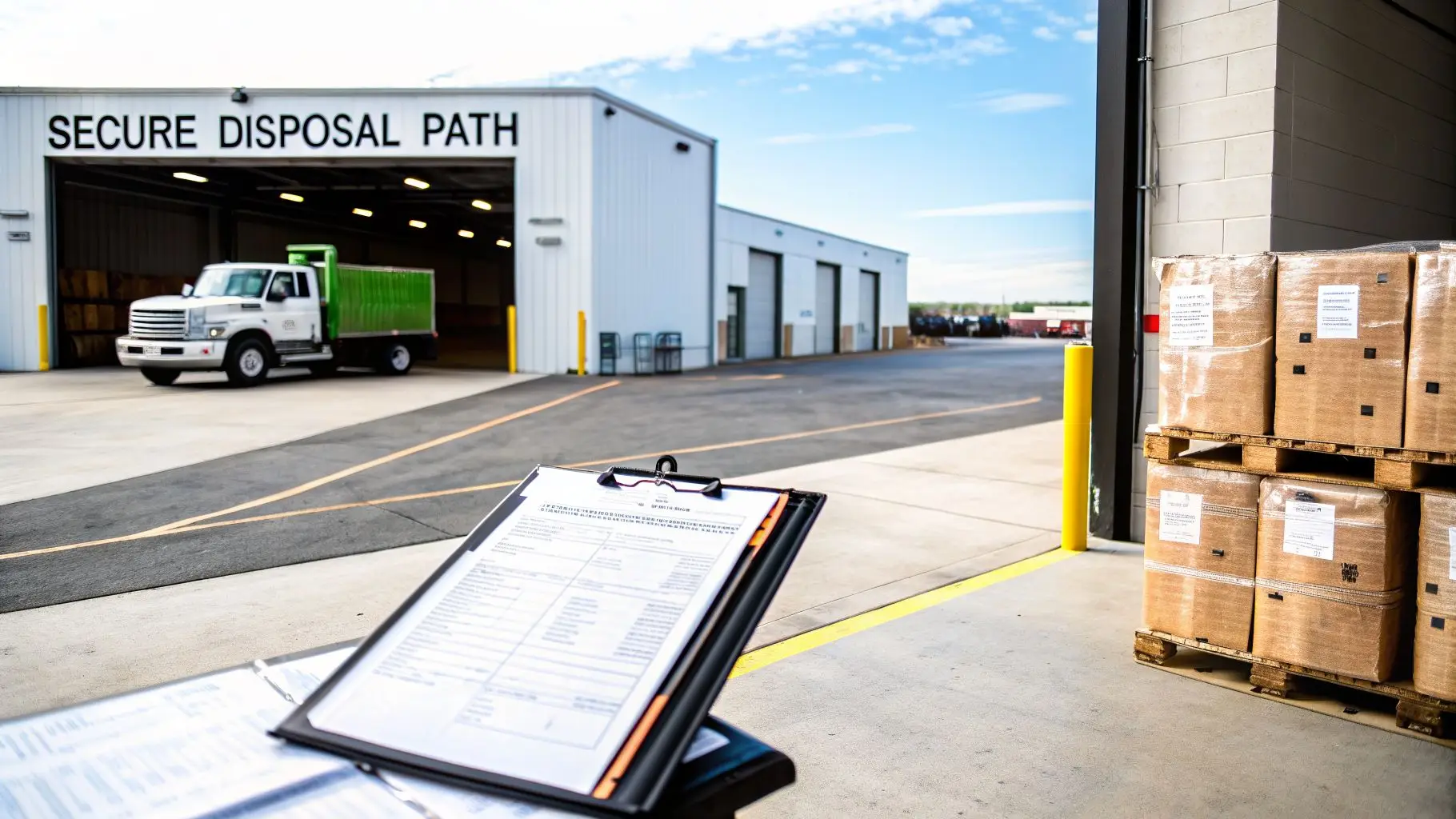
Managing universal waste correctly at your facility is a great start, but it's only half the job. The final step—getting that waste transported and properly disposed of—is where your company’s liability is either securely transferred or dangerously retained. Your choice of an end-of-life partner makes all the difference.
While the rules technically permit a Small Quantity Handler of Universal Waste (SQHUW) to transport its own waste, this path is fraught with risk for a business. It means your company remains liable for any spills, accidents, or compliance slip-ups that occur in transit, keeping the chain of liability firmly attached to you.
The Gold Standard: Partnering with a Certified Handler
The most effective way to mitigate this risk is to work with a certified electronics recycling and IT Asset Disposition (ITAD) firm. This isn't just about outsourcing a task; it's about legally and environmentally transferring liability to an expert equipped to manage it.
A certified handler like Beyond Surplus follows strict guidelines, ensuring every single step from pickup to final processing is documented and fully compliant. This professional oversight is the gold standard for any business that’s serious about risk management in its universal waste system. When planning your electronics disposal strategy, looking at best practices for mobile phone recycling in Australia can offer a valuable global perspective.
What Is a Proper Destination Facility?
Not all recyclers are created equal. To truly transfer your liability, your universal waste must go to a designated and compliant destination facility. According to EPA rules, this means one of two types of facilities:
- A Universal Waste Handler: Another facility managing universal waste under the same simplified regulations.
- A Destination Facility: A facility that is officially permitted to treat, dispose of, or recycle that specific category of hazardous waste.
Partnering with a recycler holding certifications like R2 or e-Stewards is your guarantee that they are audited against the industry's highest standards for environmental safety and data security. This verification is critical for ensuring your waste is not mishandled, which could spiral into severe legal and financial consequences for your business. You can learn more about the complete process by exploring our guide on what IT Asset Disposition entails.
The Power of Proper Documentation
Proof is everything in compliance. Your end-of-life plan isn’t complete without the critical paperwork that proves you’ve fulfilled your legal obligations. This documentation is your official record showing that liability has been successfully transferred.
A professional ITAD partner doesn't just take your equipment; they provide an unbroken chain-of-custody and the documentation to prove it. This is how a vendor becomes a vital part of your risk mitigation framework.
After any pickup, your company should always receive these key documents:
- A Bill of Lading: This form details every item taken from your facility and confirms the transfer to your handler.
- A Certificate of Recycling: This certifies that your assets were processed in line with all federal, state, and local environmental laws.
- A Certificate of Data Destruction: For any electronics that held data, this document is your proof that all information was securely and permanently destroyed, shielding you from data breach risks.
This is where a trusted partner goes from being a simple service provider to an essential part of your compliance and security strategy. They deliver the certified processes and verifiable proof you need for total peace of mind.
Turning E-Waste Compliance into a Business Advantage
Viewing universal waste regulations as just another compliance checkbox is a missed opportunity. A well-planned IT Asset Disposition (ITAD) program transforms your universal waste strategy from a cost center into a strategic asset that adds tangible value to your business.
Professional ITAD services protect you from far more than just environmental fines. Certified data destruction, for example, is your shield against costly data breaches that fall under regulations like the FTC Disposal Rule. A solid, unbroken chain of custody provides the hard proof you need to pass any audit. It turns a regulatory burden into a secure and efficient business process.
From Cost Center to Value Driver
The true power of a strategic universal waste system is realized when it starts creating value. Instead of just paying a fee to make old equipment disappear, asset value recovery programs can turn your retired electronics into a direct revenue stream. Your ITAD partner evaluates retired assets—like servers, laptops, and networking gear—to identify items with resale potential, and you get a financial return on equipment that still holds market value.
This completely changes the financial picture of IT disposal for a business.
- Reduces Total Cost of Ownership: Revenue from resold assets can significantly offset, or even eliminate, your recycling costs.
- Improves IT Budgeting: When you can predict returns on retired equipment, you can factor that into your planning for future technology procurement.
- Demonstrates Fiscal Responsibility: It proves to stakeholders that you’re committed to maximizing the value of every single corporate asset, from purchase to retirement.
A Secure and Compliant Partnership
Regulations tell you what you need to do, but a strategic partner shows you how to do it securely and correctly. The sheer scale of waste generation makes this distinction critical. While recycling rates in the U.S. have jumped from just 7% in 1960 to nearly 35% today, each person still produces around 4.9 pounds of waste every single day.
For IT managers dealing with sensitive corporate data on electronics, certified recycling is non-negotiable. It ensures data is wiped securely and all regulations are met, preventing your old equipment from becoming part of the 50 million tons of hazardous waste that was illegally dumped by 2021. You can discover more insights about recycling trends on RTS.com to get a sense of the bigger picture.
The ultimate goal is to move beyond mere compliance and adopt a program that actively benefits your business. A partnership with an expert ITAD firm transforms your end-of-life electronics management from a regulatory headache into a secure, efficient, and potentially profitable operation.
By working with an expert like Beyond Surplus, you’re not just hiring a vendor. You’re gaining a partner who provides the certified processes, detailed documentation, and value recovery opportunities you need to turn e-waste compliance into a real business advantage.
Frequently Asked Questions
Even with a solid grasp of universal waste rules, practical questions always arise for businesses. Here are direct answers to the most common queries we hear from IT managers, facility operators, and business owners striving for compliance.
How Long Can Our Business Store Universal Waste?
Your business can keep universal waste on-site for up to one year. That clock starts the moment you place the first item into a designated storage container. This one-year window is a significant advantage, giving you plenty of time to collect enough material to make a bulk pickup from your service provider cost-effective.
The most important part? You must be able to prove how long the waste has been there. That’s why every single container must be labeled with the date accumulation began. This simple step is non-negotiable for proving compliance during an audit.
Do We Need a Special Permit to Transport Universal Waste?
For most businesses handling smaller quantities, the answer is no, but you should not transport it yourself. A Small Quantity Handler of Universal Waste (SQHUW) can legally self-transport their waste to a certified facility, but it's a risky business decision. If you do, your company retains all liability for any spills or accidents that happen along the way.
The smarter, more secure approach is to partner with a certified e-waste recycler like Beyond Surplus. This transfers the risk and liability to them and provides a documented chain of custody—a best practice for any professional universal waste system.
What Happens If We Accidentally Mix Universal Waste with Regular Business Trash?
Mixing universal waste with your regular commercial trash is a clear compliance violation and can result in fines. When items like batteries or old fluorescent bulbs get into a municipal landfill, they can leak hazardous materials, creating a significant liability for your company.
The moment you mix a universal waste item with non-hazardous solid waste, the entire mixture may need to be managed as universal waste, significantly increasing your disposal costs and complexity.
The best way to avoid this expensive mistake is through proper employee training. Ensuring everyone on your team knows how to identify and separate these materials right at the source will keep your business compliant and out of trouble.
How Do I Find a Certified E-Waste Recycler for My Business?
Finding the right partner is the most critical step in ensuring your universal waste is handled responsibly and legally. You should look for recyclers who hold recognized industry certifications, as this is your proof that they meet the highest standards for environmental safety, data security, and corporate accountability.
Here are the key certifications to look for:
- R2 (Responsible Recycling): This certification ensures recyclers follow strict best practices for electronics repair, reuse, and recycling, with a focus on business and enterprise equipment.
- e-Stewards: This is a rigorous standard focused on preventing the export of hazardous e-waste and ensuring the highest level of data destruction for corporate clients.
Choosing a certified partner gives you the confidence that your e-waste is managed ethically and legally from the moment it leaves your facility.
For a partner that provides certified electronics recycling and a secure, documented universal waste system for your business, contact Beyond Surplus. Learn more about our nationwide IT asset disposal services at https://sonitechllc.com.