

If you're running a startup at atlanta tech village buckhead, you're probably thinking about hiring, customer meetings, fundraising, and keeping infrastructure stable without overspending. That's normal. What often gets ignored until a move, refresh, or audit is the hardware side of growth: who owns what, where retired devices go, and how you prove data was destroyed correctly.
That gap matters more in Buckhead than many founders expect. ATV gives companies speed, density, and access. It also creates real operational pressure. Teams add laptops fast, swap monitors often, retire servers after migrations, and outgrow storage closets long before they build a formal asset process.
What Is Atlanta Tech Village in Buckhead
Atlanta Tech Village is one of the defining pieces of Atlanta's startup ecosystem. It was created to make Atlanta a serious technology city, not just a place with scattered founders and isolated offices.

Built for startup density
Founded in 2012 by David Cummings, ATV scaled fast. It housed 180 tenant companies within its first year and by 2018 supported around 300 companies and 1,000 entrepreneurs daily, while connecting founders with investors and corporate partners including Google, Amazon, and Microsoft, according to the Atlanta Tech Village overview.
That scale changes the value of the place. You're not joining a generic coworking floor. You're entering an environment built around introductions, recruiting, mentorship, and faster problem solving.
Why founders still choose it
ATV works best for companies that need proximity to other operators. A founder can get product feedback in the morning, meet a potential partner in the afternoon, and attend a pitch-related event the same week. That's hard to reproduce in a standalone office.
For teams evaluating the area, this Atlanta Tech Village business guide is also useful because it frames ATV in a broader commercial operations context, not just as a startup brand.
Practical rule: Join ATV for access and velocity. Stay there only if you also build systems that keep pace with that velocity.
The Strategic Advantage of the Buckhead Location
Buckhead isn't incidental. It shapes the kind of access founders get and the kind of operating decisions teams make.
Wealth proximity is a real advantage
ATV's Buckhead location places startups near high concentrations of wealth. The area has median household income above $120,000, and ATV says that proximity helps amplify network effects. The same source credits that setup with helping boost Atlanta tech funding by 30% YoY since 2013 and giving startups a 2.5x higher funding success rate through on-site demos compared with other locations, as described in ATV's Buckhead location analysis.
For founders, that means casual access matters. Investor conversations don't always begin in formal pitch rooms. They often start in hallways, events, coffee meetings, and introductions from adjacent tenants.
What works and what doesn't
A Buckhead address helps when your buyers, advisors, or investors already spend time in that corridor. It also helps when your team lives north of Midtown and wants a more practical commute pattern.
What doesn't work is assuming location alone fixes execution. Plenty of startups get the prestige benefit and still lose time because they haven't planned for receiving hardware shipments, storing retired devices, or coordinating secure pickups from a busy building.
If your operations extend beyond the campus itself, this look at the Atlanta airport business corridor is a useful reminder that logistics planning in metro Atlanta always depends on route, access, and timing.
Buckhead creates opportunity. It also rewards founders who treat operations like part of fundraising readiness, not back-office cleanup.
A Look Inside ATV's Infrastructure and Amenities
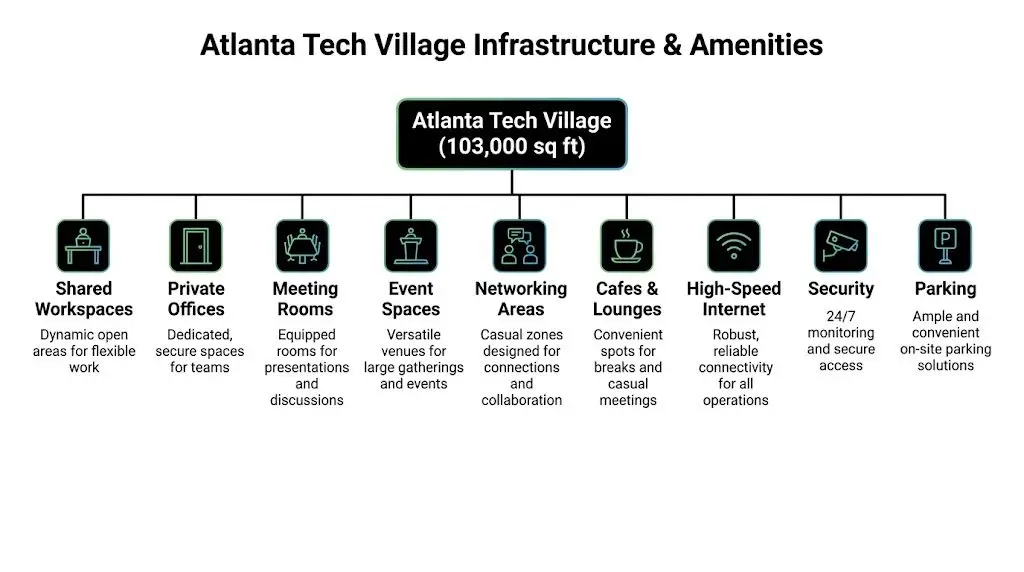
The physical setup at atlanta tech village buckhead isn't random. It was designed to keep companies close enough to collaborate while still giving growing teams room to operate.
What the building supports
ATV's facility spans 103,000 square feet, dedicates 50% of its space to community zones, and includes a 1 Gbps symmetric Wi-Fi backbone. ATV also states that this environment correlates with a 40% average headcount increase within 18 months for resident startups, based on the Buckhead space details.
That matters because infrastructure isn't just aesthetic. Founders need practical choices:
- Hot desks when the company is early and flexibility matters.
- Private offices when security, calls, and team rhythm start to matter more.
- Shared rooms and common zones when meetings, recruiting, and product demos become part of the weekly routine.
The operational read on amenities
A founder should look at the space through two filters.
| Focus | What to ask |
|---|---|
| Team growth | Can your layout change without forcing a disruptive move? |
| IT support | Is there a plan for device staging, storage, and retired hardware? |
| Collaboration | Are common areas helping your team close work, or just creating noise? |
If you're comparing office setups more broadly, these detailed workspace inclusions are helpful because they show how operators evaluate workspace beyond rent alone.
The same principle applies internally. If your company is adding gear quickly, a centralized storage solution becomes important long before you think it will.
The ATV Community and Event Ecosystem
The strongest part of ATV isn't the furniture or the Wi-Fi. It's the concentration of founders, operators, and mentors who are all dealing with similar problems at different stages.
Some companies need intros to buyers. Others need hiring advice, product feedback, or a faster path to capital. ATV works because those conversations happen in normal workflow, not only at formal events.
Why the community has staying power
The alumni list tells you what kind of companies can emerge from the environment. Notable names associated with ATV include BitPay, Yik Yak, and IO Education, with ATV also known for helping connect startups to mentors and large corporate partners in Atlanta's business community, as noted earlier in the article.
That mix matters. A fintech founder doesn't just learn from fintech peers. They also learn from SaaS operators, GTM leaders, and founders one stage ahead who already made the mistakes they're about to make.
What founders should actually use
ATV's ecosystem pays off when founders do more than lease space.
- Attend pitch practice and founder events regularly.
- Ask for warm introductions with a specific ask.
- Use the community for implementation advice, not just inspiration.
- Build reciprocal value. The founders who help others usually get pulled into better conversations.
The best use of ATV is simple. Show up prepared, ask clear questions, and become known as someone who executes.
Navigating Membership and Accessing the Village
Not every team needs every option on day one. What they do need is the right amount of space and access for the next stage of growth.
ATV accommodates different working styles, from flexible desks to larger private offices. That makes it practical for solo founders, lean startup teams, and companies that need a more controlled environment for meetings or hiring.
A practical way to evaluate fit
Start with these questions:
- How many people need dedicated space now
- How often do you host calls, demos, or in-person meetings
- Do you need room for equipment, staging, or secure storage
- Will headcount shift quickly over the next few quarters
Public events can be a low-risk first step if you're unsure. They help you test whether the community is useful before you commit to a larger footprint. For some founders, that reveals a good fit. For others, it shows they need less coworking energy and more private operating structure.
Managing Your Startup's Tech Lifecycle at ATV
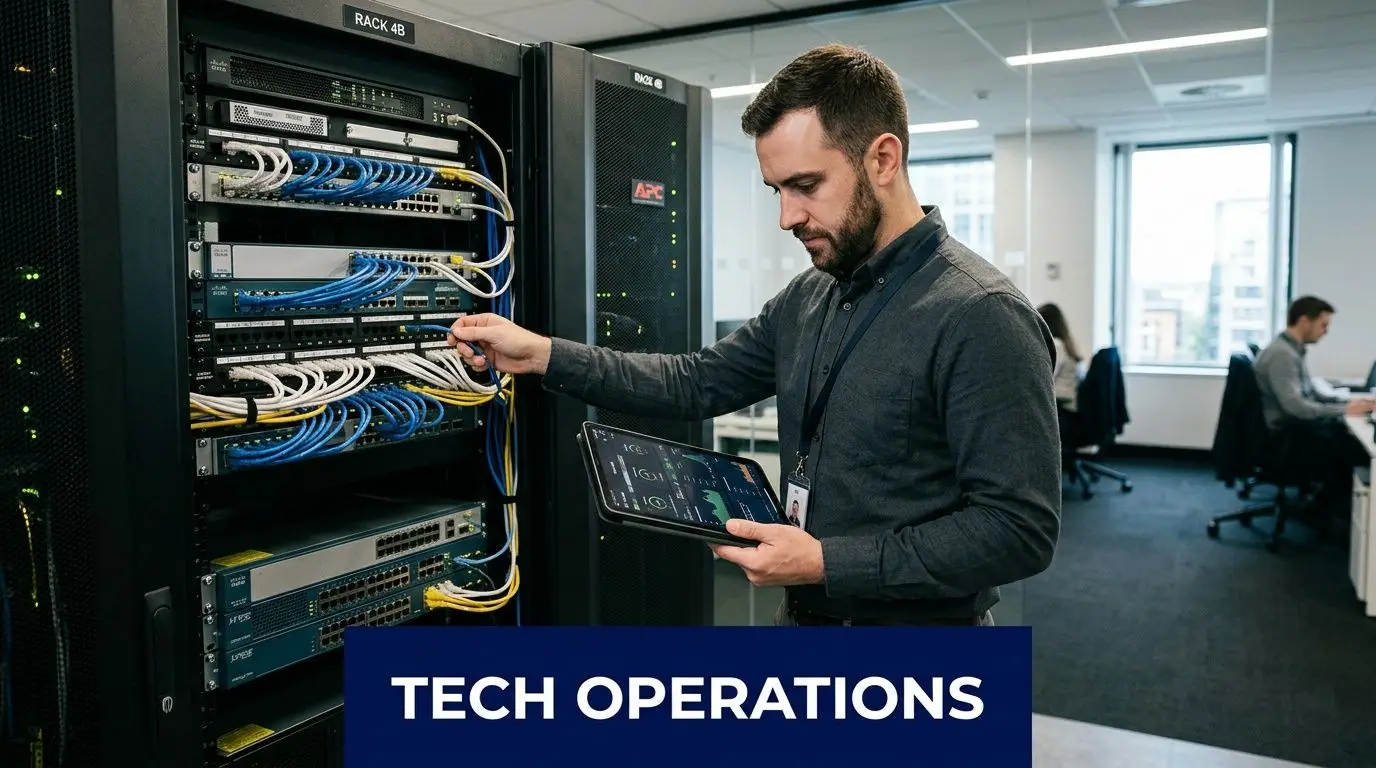
Many growing companies frequently get sloppy. They buy equipment quickly, assign it informally, replace it during hiring sprints, and then leave old devices in cabinets, under desks, or in locked closets.
The blind spot most founders miss
One source notes that despite supporting 300+ startups that have raised over $826 million, information on secure IT asset disposal practices at ATV is limited. It also points out the compliance risk for companies in sectors like healthcare and finance that must meet rules such as the FTC Disposal Rule. That gap is described in this review of operational needs at Atlanta Tech Village.
If you're a founder, the issue isn't just recycling. It's chain of custody, documented data destruction, employee offboarding, and making sure nobody takes shortcuts with devices that once held customer, financial, or health-related information.
What a mature lifecycle actually looks like
A workable process usually includes:
- Procurement control so laptops, phones, and peripherals are logged when they arrive.
- Assignment records tied to each employee or department.
- Refresh triggers based on business need, not random desk cleanouts.
- Disposition rules that define wiping, destruction, remarketing, and recycling paths.
Founders often spend time on product validation before they spend time on asset governance. That priority makes sense early. But once you have staff and customer data, operational discipline needs to catch up. This guide on how to validate your startup idea is useful for the front end of company building. The back end needs equal seriousness once the business starts handling real devices and real records.
A formal IT lifecycle management program in Georgia is one way companies keep those steps from becoming ad hoc.
Field advice: If retired equipment is sitting in your office because nobody owns the process, you don't have a disposal plan. You have deferred risk.
Key Compliance and Logistics for IT Managers in Buckhead
Buckhead adds convenience for business access. It can also complicate secure pickups if your IT team doesn't plan ahead.

The checklist that prevents bad handoffs
For IT directors at ATV, the facility design and Buckhead location create special logistics needs for secure ITAD. Ripple IT notes that teams handling de-installations or office moves need providers that can manage chain of custody in a dense urban setting and issue clear documentation. That's covered in this ATV case study from Ripple IT.
Use this checklist before any pickup or decommission:
- Control the inventory: Count and label everything before a vendor arrives.
- Define the data path: Decide what gets wiped, shredded, remarketed, or recycled.
- Coordinate building access: Confirm loading, timing, escorts, and elevator rules.
- Require documents: Get asset lists, pickup records, and destruction documentation.
- Match standards to policy: If your policy references secure sanitization, align it with NIST SP 800-88 practices.
What usually goes wrong
The most common failure isn't technical. It's procedural. A team moves fast, a manager approves a pickup, and nobody reconciles serial numbers afterward.
That creates confusion during audits, insurance reviews, or customer security questionnaires. In regulated environments, that kind of gap is avoidable and expensive.
For companies operating at Atlanta Tech Village Buckhead, secure IT asset handling shouldn't be an afterthought. Beyond Surplus helps businesses with certified electronics recycling, secure data destruction, IT asset disposition, and pickup logistics that support compliance and chain-of-custody requirements. Contact Beyond Surplus for certified electronics recycling and secure IT asset disposal.